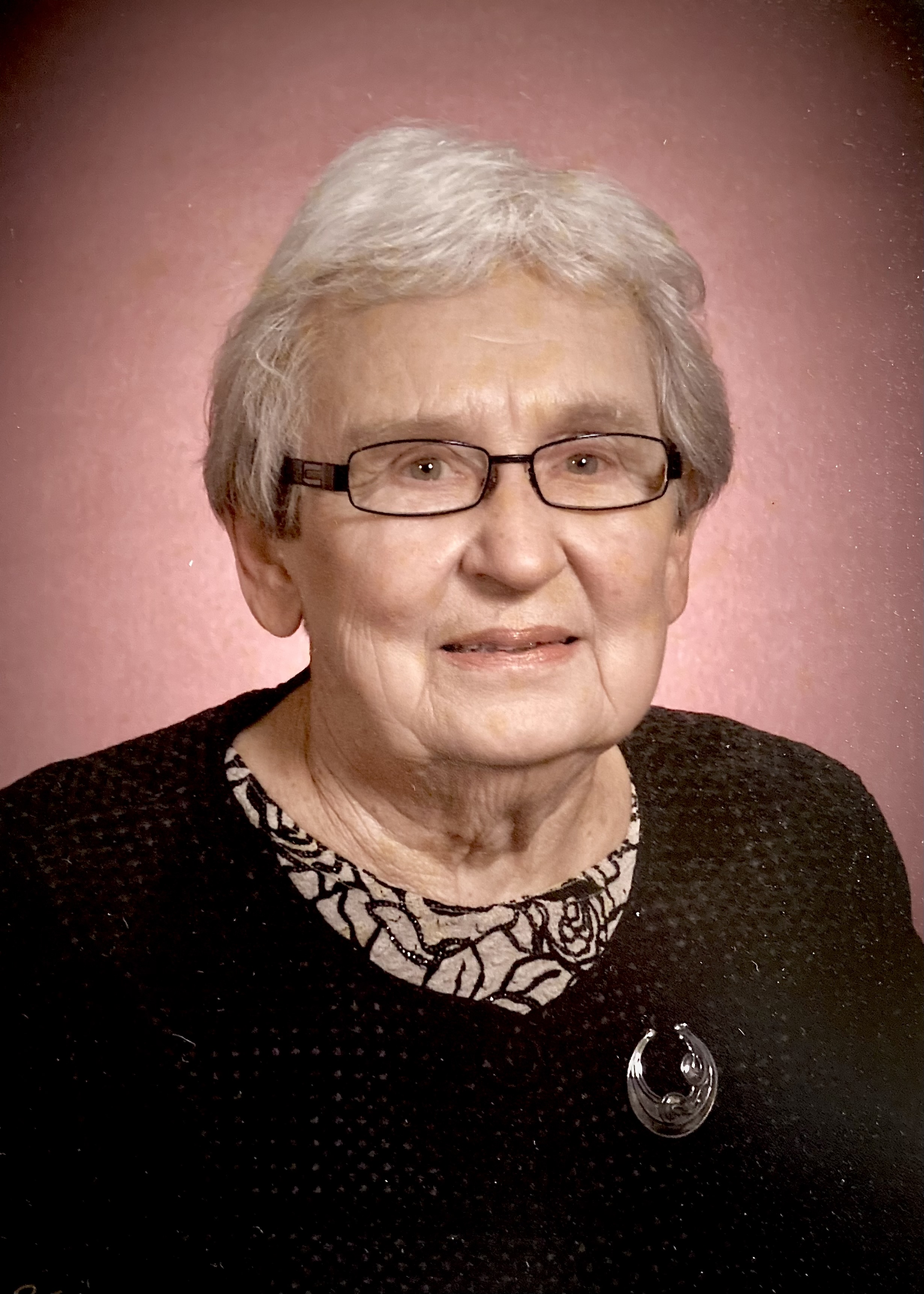
I’ve been away for the past month or so, working remotely as much as possible and taking care of my mother who, at 97, was in her final days. My brother and I were fortunate enough to be able to stay with her and care for her with the help of the team from St. Croix Hospice as her body shut down. She passed away on January 17, 2025, and her funeral was January 24. At the funeral, I was charged with giving her eulogy, while my brother, his dauther, and my son performed a song she had requested: Kermit and Zoë sang and Aidan played violin. My wife, Kim, and my niece, Elizabeth, read two of her favorite Psalms. Mom had selected several hymns and pieces from the traditional Lutheran liturgy. What follows is the text of the eulogy I wrote for her.
Leone Kathryn Dunkelberg — or Mom, Aunt Leone, Grandma, or Grandma Leone to her great grandkids — lived to be 97 years and seven months old. She was much loved by her family and was the glue that held us all together and brought us together in Osage by creating a warm and loving space in the little house that she and my dad, Albert Gibbs Dunkelberg built seventy years ago, in 1954. It was there that she raised her family, and there that she wanted to spend her final days, and we are so blessed that we were able to spend those final days with her with the whole family gathering again for the holidays.
If there is one quality that characterizes my Mom, I would say it is “caring.” Of course, she cared for and took care of her family, but I am also thinking of her profession as a nurse. Mom graduated high school in 1945 and entered nurse’s training at Iowa Lutheran Hospital in Des Moines as a member of the last class of the United States Cadet Nurse program while World War II was still going on. She graduated in 1948 and began her career at the Veteran’s Hospital in Des Moines, where she would meet my dad as a patient, in the hospital for appendicitis. She also served with the Red Cross at Iowa Lutheran Hospital in the summer of 1952 during the polio epidemic, and I want to remember just how brave and selfless that was, since in 1952 the Salk vaccine had not yet been invented so exposure to polio patients came with very real risks. We can liken her work to those brave doctors and nurses who more recently were on the front lines at the height of the COVID pandemic. Mom certainly knew the risks, since my dad had recovered from polio and would walk with crutches for the rest of his life until he was in a wheelchair, and she would have known of many others who were nowhere near as lucky.
Mom continued to work as a nurse either full time or part time, working at the Mitchell County Hospital for 34 years after they moved to Osage. Even after she retired, she continued to care for friends and neighbors when they were sick, checking in on them, and helping them to navigate their treatment. I was impressed that even late into her life, when my sister had cancer or someone else she knew was on medication, she would always look it up in her medical manual, so she could be familiar any side effects and the expected benefits of each drug. Even in her final days, she was very conscientious about her own medications.
Yet there was more to being a nurse for Mom than just the medical side. She was there to take care of the whole person, and not just the physical. In talking to many of her friends in recent days, I have learned how she was there for them in difficult times, whether those were due to health issues or other trials they were going through. Mom would listen and offer advice when that was what someone wanted or needed, and she would also make sure to stay in touch and to maintain those relationships even when she was no longer able to leave her house.
This side of her goes back at least to when I was a little boy, and undoubtedly before then as well. Mom always had fruit in her yard and garden, and she was an excellent pie baker—who passed her skills down to her kids and now to her grandkids—and she often baked homemade cherry, apple, or rhubarb pies in the summer. When she did, she always made some extra crust and baked a few small pies to give out to our neighbors. She called these her “widow” pies, and she would send me or my brother to visit Mrs. Marshall, Mrs. Delaney, or Mrs. Viscosil with a widow pie as an offering. I realize now that she was doing more than giving a sweet treat to a neighbor. She also wanted us to be the ones to bring it and to spend some time with each woman when we did. We often got candy or a cookie in return, so we didn’t mind, but Mom was also training us to care for others the way she did.
Yet Mom also had an adventurous spirit. It’s hard to believe, since she was only five foot four, but she lettered in basketball in her senior year at Thornburg High School. I’m sure that entering nurses training was also quite an adventure for an Iowa farm girl. I also think of the trips she and my dad took before us kids were born, and the family vacations we took every summer, usually to visit a grandparent in California or another who lived in Florida. We got to see a lot of the country that way, and I suspect my mom did a lot of the planning for those trips, with the help of my dad and AAA. They also allowed us to host foreign exchange students when Kermit and I were in high school, and so we developed life-long friendships with George Ulrich from Denmark and Jon Morten Mangersnes from Norway. They even allowed Kermit and I to go on exchange ourselves, though I’m sure that was an even harder decision to come to. Long before that, our family had hosted Rotary exchange students from the University of Iowa at our house for Thanksgiving: one from Iran, one from India, and one from Germany, opening our cultural horizons. And after my father passed, my mother would travel to Europe when my family was there for a semester, and she would take many bus tours, mostly with groups from the bank and even go on cruises to the Mediterranean Sea, to Alaska, and to Panama, going through the Panama Canal as my dad had in his Navy days.
Mom was always open to new experiences, and she became very accepting of other people’s views and ways of life. She read widely, and was an active supporter of the arts, especially the high school and community theatre and musical productions. She also was a great supporter of our neighbor Mary Ann Marreel’s art, my brother’s acting, and my poetry. She was part of the Bread n’ More Dinner Club, who often had internationally themed meals or explored other unfamiliar culinary traditions. She was an excellent cook, and a gardener with a green thumb.
Finally, I would say that Mom loved life, yet she was also very accepting of death. She said she was ready to die, and she often told me that you never know what day you will die, that it could come at any time for her. She had a deep faith, so she was not afraid of dying, and yet in her final days, it was clear that she also wanted to enjoy each day as much as she was able. There were times when we thought she was very close to the end, yet she would wake up, ask for toast and coffee, or ask to go sit in her recliner in the living room, and even if she slept most of the day, these little things made her happy. She also took advantage of those moments of clarity and energy to give me and my brother a lesson or two, or to have one last heart to heart talk with other family members and friends. Mom lived a long life, and she lived each day well. She was humble and gracious and wise. She was always there for others, and she also took care of herself. She had an amazingly strong will to live and to stay alive long enough to be with us all again, and she did it. She said in her directives that she wanted her funeral to be a celebration of life, and she has done everything she could to make that possible. Even in death, she is taking care of us all. It is impossible to imagine a better end to a life well lived.
Postscript: of course, after the fact, there are a number of things I realized that I left out. How could you include all the memories. One was that for her 80th birthday, Mom decided she wanted to take a ride in a hot air baloon. We had all gathered in Albuquerque, and she, my sister, my niece, and I all got up very early to drive into the valley where we met the balloon. It was in the shape of a green alien, and for years, she would drink her New Year’s toast out of a champaign flute with an alien head that they gave her after that ride.
There are many more memories, like looking for birds or telling her about any sightings we had (on our drive back to Mississippi this time, we saw three bald eagles that we didn’t get to tell her about) or canning cherry or rhubarb jam every summer when we visited—I hope to do that at least one more time when we close up the house. I’m sure many more memories will come to me at unexpected moments over the next weeks and months. Mom had a good, long life, and I was fortunate enough to have her in my life as long as I did. She will live on in our memories.
 Kendall Dunkelberg
A beautiful soul; a beautiful eulogy! ❤️