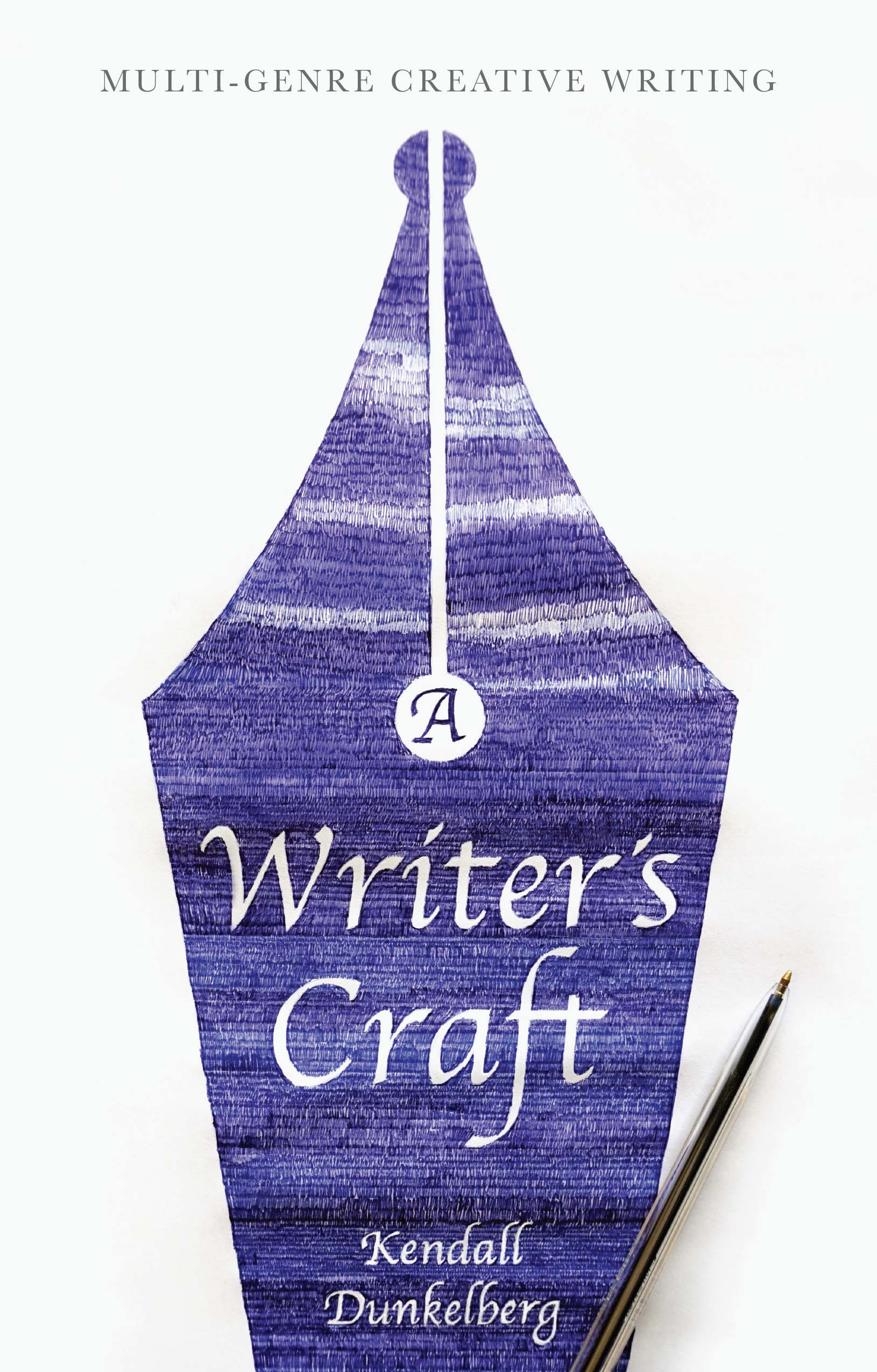
Where in the World Is A Writer’s Craft?

This semester, I am on sabbatical, working on revisions to A Writer’s Craft: Multi-Genre Creative Writing that will become the second edition. My manuscript is due to Bloomsbury on January 15, so I need to stick to my schedule, but I’ve had a good week of writing (even though Labor Day cut it short), so this morning I got a little distracted.

This week a student wrote me out of the blue with a question about the book, which he’s using for a class at a school in Minnesota. Maybe that’s what led me to search on the book, or that led me to a post I wrote several years ago about a review on a site that no longer exists and that led me to search for more reviews. In any case, when I searched on the book title and my name, a lot of hits came up, mostly to my site or to Amazon.

But as I scrolled through the list, I began to notice an interesting phenomenon. Many of the links were to eBay, which wasn’t surprising, but looking closer, I noticed these were eBay listings from different countries, as identified by the address: ebay.ie or ebay.uk, etc. Ireland and the United Kingdom, even Australia, were hardly surprising, since my publisher is Bloomsbury, and before that was Macmillan International Higher Ed. (The imprint is Red Globe Press, which got sold to Bloomsbury a few years back.)

I’ve known that the book is sold internationally, and that the UK, Australia, and New Zealand were part of their distribution. What was more interesting was to see copies showing up on eBay in Denmark, Norway, The Netherlands, Belgium, and France, even Germany, Finland, and several Slavic and Eastern European countries. What this tells me is that there are copies in these countries that have been purchased and are now being sold used, which would suggest that the textbook has been adopted beyond the English-speaking world.

That’s interesting for me to know as I dig into revisions of the book for the next edition. I’ve been planning to add more examples and references to authors, and had already planned to include more international authors. The truly global market for the book reinforces that decision and justifies referencing more writers who wrote in languages other than English (in translation, of course). That makes me happy since besides teaching creative writing, I taught World Literature for many years. I know these writers, and I’m glad to present creative writing from a truly global perspective, and not privilege American and English writers over other traditions around the world.

I’m sure I’ll rely on English-language writers quite a bit when looking for examples, since that will be the easiest, yet bringing in other writers whose work is known and translated into English expands the horizons of what is creative writing that I can think about and talk about in the book. This goes along well with other changes I’ve been contemplating for the second edition, including inclusive writing pedagogy and an anti-racist approach to the workshop.

Advice for MFA Applicants

I’ve been writing about the MFA application process for over a decade, ever since we prepared to launch our Low-Residency MFA in Creative Writing at Mississippi University for Women in 2015, so of course, I was interested when the latest issue of Poets & Writers (September/October 2025) advertised a feature section on choosing and applying for the MFA, along with other advice for writers. And I’m also not surprised that the articles were disappointing. It’s not that they were wrong, but more that they didn’t go into much depth. I usually like Poets & Writers and value their advice, but this time, they didn’t give each topic enough attention and barely scratched the surface.

Lyzette Wanzer, giving advice on how to choose an MFA program, focused more on things like geography or the weather than things like program culture or the kinds of faculty and students a program recruits. Geography can be an interesting factor to consider, but I would rank it pretty low on my list of criteria unless there are reasons you need to be in a program close to home. Your experience in a program will be affected much more by the people you work with than whether there are mountains or snow or city streets and cafes, though those factors may ultimately play a role in your decision.

Similarly, Wanzer mentioned that some programs are fully funded, while others are not, but she also made a distinction between “fully funded” programs and those with graduate assistantships and other forms of aid, which is a little misleading. While it is true that there are some programs that fully scholarship some students (I’m thinking of the Michener program at the University of Texas at Austin and a few others), these are exceedingly rare and extremely competitive. Most programs that are called “fully funded” do rely on assistantships to fund their students, which means that students teach classes, do research (rare in creative writing), or work in writing centers to work their way through grad school. These assistantships come with a stipend and (usually) a tuition waiver. The stipend often isn’t a lot, but will usually allow a person to live without a second job. It’s probably not going to be enough to support a family or live a lavish lifestyle, but you can get by, maybe by renting an apartment with room mates or limiting how often you go out to eat.

You also get valuable teaching experience while on an assistantship, which can be important if you want an academic career. And you should have health insurance and other benefits as an employee of the university. When weighing an offer from an MFA program, it is important to look into the financial implications: what is the cost of living where you will be, what kind of apartment could you afford, will you have other expenses like travel, and what kind of stipend and other benefits does the university provide? These issues get little mention in the Poets & Writers piece on choosing an MFA program, though to be honest, they could have probably added another article just about weighing the offers you get, assuming you’re lucky enough to be accepted into multiple programs.

The choice of where to apply and the choice of which school to choose in the end is very different, though the first influences the latter. The choice of where to apply is aspirational. You probably want to apply to different kinds of schools, some that are close and some that are far, some that are in uban areas and some that are rural, some that are prestigious and some that are hidden gems. Your choice of which one among the programs that have accepsted you to actually attend is much more pragmatic. May you all be so lucky to have two or more to choose between!

Wanzer did mention the differences between traditional MFA programs that involve taking classes on campus and low-residency programs that don’t. She didn’t go into why not being on campus often means that low-residency programs don’t offer much in the way of financial assistance. However, low-residency programs do allow students to keep their current jobs, which often are more lucrative than graduate assistantships. We allow students to live close to family or to stay where they are for all the reasons that you might want or need to do that. There are benefits to both models, as I point out in my post Low-Res or Fully Funded, an MFA Decision. It is also important to think about how you will afford your MFA, especially if choosing a low-res or fully online program.

I don’t mean to be too critical of Wanzer either. She gives some valuable information; there is just so much more to say. But I’ve written on these subjects a lot, and Poets & Writers only gave Wanzer a page in the magazine. Hers is the most detailed of any of the advice articles, which may be why I had more things that I wanted to react to.

Rene Steinke, who I admire greatly, gave advice on how to write your personal statement, though she focused primarily on how to think about and brainstorm to answer the question “why do you want to be a writer?” and by extension “what kind of writer you want to be?” Her piece is pithy, well written, and enigmatic, which befits the challenge of trying to answer those questions. Yet I have argued (more than once) that the statement about why you want to be a writer is often the least interesting or informative part of the personal statement. That might be why Steinke focuses on it, since that is where so many letters fall short. Yet, it’s also important to talk about how you’ve prepared for an MFA in writing or what you’ve written already, and to answer questions like where have you worked, have you published or at least attempted to publish, have you taken workshops, and what kind of writing do you like to read?

Similarly, Dan Beachy-Quick, a poet whose craft essays I’ve often taught, when writing about “How to Matke the Most of Your Time in an MFA,” focuses on immersing yourself in language and learning to value things about literature that your younger self may have scoffed at. Great advice, though I would like to add that probably the best thing you can do to make the most of your time is to develop community. Make lasting friendships and get to know your mentors as people, not just as writers you can learn from and network with. These relationships will stay with you for the rest of your life, which is why when choosing a program, more and more I think you should consider the people and the culture of a program more than anything else.

When I was reading with another poet recently, I was reminded of this when she told a story about a faculty member who criticized her poems for being too personal and who refused to serve on her thesis committee because he couldn’t handle “confessional” poetry, even though she would argue (now — maybe she didn’t have the experience to argue it then, she didn’t say) that her poems weren’t confessional. We’ve all been there, and I understand the stigma that anything with a slight scent of “confessionalism” faced a decade or more ago. I went through something similar with one of my grad school professors, though he didn’t use the term “confessional” with my poems. He was a lit professor, poet, and translator, and I learned only after I graduated that he had said some quite negative remarks about my poetry, not that he ever taught me in a creative writing class or had any reason to even think about my poems (I was in a PhD in Comparative Literature at the time). These are experiences no one needs. It may be true that they are unavoidable, though choosing a program that is a good fit for you can help, and having good and supportive mentors can help you make it through when the nay-sayers inevitably come your way. Having a community of writers can also help you develop the thick skin you will need to handle rejection and to keep writing until you begin to see the successes.

That may be one reason I value Molly McCully Brown’s piece on “How to Think about the Value of a Creative Writing Degree.” She understandably focuses on the writing you will do, the deadlines you’ll face, and the progress you’ll make as a writer, yet she also thinks of it in terms of the readers you will have, the questions you will ask of one another, the community you will build. She does not emphasize the final output, and maybe rightly so. Though an MFA typically leads you to a thesis, which is a book-length project, she ends her piece thinking about all the other “beginnings” you have created during your time in a program. Arguably, one of the main points to the MFA is that thesis, and learning to wrestle with a project that is as unruly and unpredictable as a book is probably going to be your crowning achievement, and may be the main thing that writers seek to get from their MFA. But the value isn’t only the thesis, the publishable manuscript itself, but is learning enough about yourself and about finishing a long project like this that you can do it again—and again and again.

The value of the MFA is not in learning how to knock out a novel or a collection of poems quickly and more efficiently. As McCully Brown suggests, it is to learn to complicate things, to ask more challenging questions, to dig deeper and to push yourself further, and to come through that wilderness to achieve a finished product: novel, collection of poems, stories, or essays, a play or collection of short plays, etc. which you can be proud of and that no one but you could have written. And then to be prepared to take on a new project with equal rigor. And to do it with the friends and other writers whose advice and words you value. Yes, I’m thinking of both the living, breathing community of writers you begin to accumulate in your MFA experience, and those writers you have read who may be long dead or may be the writers you admire from afar but haven’t met yet. You can discover your tradition, your canon, and your compatriots in your MFA journey, which will stay with you and sustain you throughout your writing life.

Can you do those things without an MFA? Of course. Many writers have and many writers will. Can you do them in the same way and with the same level of intensity outside of an MFA experience? Possibly, though it is very hard to replicate on your own. If you’re able to earn your MFA and you’re ready to do it, nothing should hold you back. But financial concerns, life challenges, and other roadblocks often do get in the way, and there should be no stigma against writers who don’t hold the degree. But for those who can make it happen, as my students say over and over, it is a transformative experience when you dedicate those years and that effort to the study of writing with others who are with you on the same (or a parallel) journey.

I’m grateful for Poets & Writers for including this feature section on advice on the writing life. There are other essays that go beyond the MFA experience that I won’t respond to here. All are well-written and provocative. I only wish they were longer. But the nice thing about a magazine format is there is always another issue, and with it the opportunity for more advice. And on my blog, I can keep returning to these same subjects, hopefully with new insights and updated information.

Orpheus in Serbia

Over on Substack, I wrote a post with this title, detailing the backstory of how I came to know the Greek cabaret (music) group StarWound. I won’t repeat that here (because you can read the post for free on Substack), but suffice it to say that they are performing my poem “Orpheus” along with others from their project “Interiors” at the Nisville Festival, one of the biggest alternative music festivals in Europe under the direction of the legendary Maja Mitic.

I’ll let you read in the Substack post about this performance and how they came to Columbus and performed at Mississippi University for Women. Instead, here I will add a little anecdote about how after their performance in Poindexter, as we were coming back to Puckett House after a slight detour to look for something to drink and to snack on, we encountered a deer ambling across College Street and onto the campus of Mississippi University for Women right by Whitfield Hall and the main gate. Now, we have quite a few wild animals on our campus, but I usually see feral cats, squirrels, and groundhogs, maybe the occasional armadillo, but never before (or since) have I seen a deer. It was a quiet night, so maybe he felt safe enough to explore (I’m pretty sure I remember right that it was a buck). That was just one of the magical moments that happened with StarWound during their visit. So far it hasn’t made it into a poem, though who knows.

There apparently will be a video of at least one of their upcoming European performances that I’ll be able to share. And I’m hopeful I’ll get to see video from tonight, though I’m not sure it will be sharable, at least not online. I’ll be doing a benefit reading later this month for a CD project with a selection of songs from StarWound’s US tours. More on all of this soon!

There’s lots going on, even when I’m not actively participating — but maybe one day I’ll be able to get over to Greece to see StarWound where they live or see them perform again in person. In the meantime, this fall, they’ll be touring several campus in the Northeast.

Writers Resist AI with Human Interaction

I’m on book tour, which means that wherever I go and whenever I can line something up, I’ll be giving a reading at bookstores, libraries, schools, and other venues, even virtual ones. As I do this, it has occurred to me that this may be one of a writer’s best defenses against the abuses of generative AI. Here you see me heading into Three Bells Books in Mason City, Iowa, with a box of physical books. We had a nice small crowd for an intimate reading that Saturday evening. I’ve had bigger and smaller turnouts in recent weeks, but the one thing that remains a constant is the human interactions I get to have.

That’s one thing, AI bots will never achieve. No matter how much the bots’ voices might improve or how convincing their interaction might become as they learn to mimic us better and better, they will never be more than a shallow copy of human experience. They will rely on reconfiguring and regurgitating the human experiences they take in through their large language models (including the unauthorized use of my last book, apparently), but they will have no direct experience of what it means to be human, to read or listen to a poem and feel the impact of those words resonnate with your own experience. They can only learn from us, but can’t become us (at least not until an AI is implanted in a living, breathing human body, which is a very scary thought (sorry)).

As a teacher, I’ve learned that one of the best ways to combat AI use by students is to develop a personal relationship with them, to work with them on their writing at every step in the process, to guide them, yes, to ensure that they are working on their own, yet also to let them know that what they write will utlimately be passed on to a real human being who values what they produce because I value their experience and their thought. Writing can no longer just be about the final product. It has to become about the journey that the person who wrote has gone on to reach that final product. That might be their intellectual journey, but is also and equally their very physical journey as an embodied person whose self gets poured into a paper, a story, or a poem.

As writers, we embody this principle when we give a reading. We are a living, breathing human being who obviously cares about the impact our words could have on the living, breathing human beings in front of us. The poems are no longer just about a final product, they are about the ability to communicate our experience (of life, of image, of language) to people whose lives or language or imaginations may be impacted by the experience. By reading (and talking about what we read), we not only prove that we wrote it, but we engage in conversation with those who gather to hear it. A reading is not just about the poems that were read; it is about where those poems take the room and how the people in that room react and give back to the writer through the conversation.

This can happen, too, in a virtual reading, but I predict there will be more and more emphasis on in-person literary events: readings, workshops, or salons of all kinds, as the public thirsts for more human interaction in response to the unfulfilling interactions with our increasingly technology-centered world (from the self-checkout at the grocery store to the customer service bots we all encounter online or on the phone).

What is most valuable about literature is its humanity — something we are in serious danger of losing right now — and what better way to show humanity than to show up in person, read from your work, and open yourself up to the vulnerability of taking questions. By doing so, we reaffirm the value of human interaction at a moment when so many forces seem to be moving away from the human in favor of the automated, the regurgitated lowest common denominator, and the predictable. By giving readings to a crowd of one or one hundred, writers can resist the tech-bro billionaires pushing a technology on us that most people didn’t ask for and don’t even want, simply by being human and putting our humanity out there through our words.

Thanks, Tennessee Williams: on the importance of blogging

Let me take a minute to explain the title of this post. Now and then, I search on myself to see what might be out there: to see where my latest book is being sold or whether there are any new reviews, for instance. Yes, I have a Google alert, but it doesn’t always catch everything, and searching can pull up some older references I’ve forgotten about.

That was the case today. When I search on my name, I often get a ton of results from this blog, most of which I ignore, but this morning one was a reminder of the time in 2020 when I participated (virtually) in the Tennessee Williams Tribute. I wrote about the poem of Williams’s that I read, “Orpheus Descending” and the poem of my own that I read with it, “Ishtar.” I also mentioned that this had led me to write “Orpheus” and “Eurydice,” two poems in Tree Fall with Birdsong. I’ve been reading these poems, and I remembered why I wrote them, but had forgotten the connection to Tennessee Williams. That cycle of poems about myths of the underworld became important to how Tree Fall with Birdsong reached its conclusion, and therefore important to how I found a publisher.

If I hadn’t blogged about it in the first place, and then if I hadn’t found that nearly five-year-old blog post, I would probably never remember the debt I owe Tennessee Williams.

This year, I’ll be participating in Friendly City Books’ Possumtown Book Fest, leading a poetry workshop. Now that I’ve retrieved this memory, maybe I’ll try to find a way to incorporate it in the workshop: either by reading another Tennessee Williams poem or by bringing in another poem for participants to respond to.

Of course, I could write a journal instead of writing this blog, but that might be a little harder to search. I would have to know to pick up an old journal and start reading in it for inspiration. If you don’t want to put all of your thoughts online, that is still a great option. Let this be a reminder to pick up those old journals and flip through them periodically. You never know what you might be reminded of or where that journey might take you.

How to Read a Book of Poems

This question has come up at some of my readings this month for Tree Fall with Birdsong, so I thought it might be worth blogging about. The question usually arises from my discussion during a reading about how some of the poems are related or about the section of the book that a poem appears in. I often talk about a book section as a poem cycle, and that leads people to wonder: should they read the book cover to cover in order, or is it okay to skip around and read poems individually, which seems to be a common practice, at least of those who ask the question.

My answer is, yes. It’s okay to skip around, and yes, many poetry collections are meant to be read in sequence. That is to say, most poets spend a lot of time and thought on arranging a collection in a particular order. It is not just chronological, though with my collections there is often a somewhat chronological order to the sections of the book. Individual poems, though, might have been written at very different times. I might write one poem early in a book’s history, and then come back to that theme again much later and write poems that go with one or more earlier poems. Or I might move poems around between sections to weave certain themes together, rather than having all of one theme in one section.

When putting a collection together, I think a lot about how one poem might lead into the next poem, and I want them to speak to one another in an order that is consciously arranged. I’m a poet who wants the experience of reading the collection in order to be meaningful and to lead to new insights that you might not get if you read poems individually. Yet I also acknowledge that many readers prefer to read that way (or do that out of habit), and that is all right.

After all, poems are written as individual pieces. They are meant to stand on their own and often appear initially in a completely different context, in a literary magazine, for instance. As editor of Poetry South, I also spend time thinking about the order of each issue and how poems speak to one another in that context, so I hope some readers will the magazine in order, too. I’m always mildly annoyed with magazines that organize their contributors alphabetically — that’s convenient, both for the editor and for the reader who wants to find a poem by a particilar poet (but that’s what the table of contents is for) — but I still like to curate the experience.

I like to think of a poetry collection and even a poetry magazine as analogous to an art exhibit. If a gallery owner hung paintings alphabetically by artist or by title, that would be within their rights, but it would also be somewhat disappointing. There’s so much more to discover when art or poetry is arranged intentionally so that the individual pieces can be in conversation with each other.

In my interview in Southern Review of Books with C. T. Salazar, we got into a discussion of how the poems in “Tree Fall” echo one another with certain lines or phrases coming back recursively in each. If you don’t read the poems in order, then you likely won’t catch this use of repetition, and you won’t see how the phrases evolve over the course of the sequence. Sometimes I think of a book as one long poem in several movements. The composition of the book took place individually over a long period of time, but the book coalesces when the connections between poems begin to emerge and an order gradually emerges.

But in the end, it is your book once you buy (or borrow) a copy. If you want to skip around and read the poems that strike your fancy first, by all means, go ahead. I would encourage you to reread it at least once by reading cover to cover, but maybe you want to do that only after you’ve discovered your favorite, so you then can see them in a new light upon rereading. Or read it cover to cover once, and then go back to your favorites to read again and again. A poem should stand on its own and be meaningful without any additional context. A collection adds to and deepens that meaning by arranging the context and providing the reader more to go on, if they are willing to read it in order.

At least my poetry books are arranged this way. I’m sure there are other poets who don’t do that as much. I see more collections these days that don’t include sections and simply present the reader with a single series of poems with no pauses or breaks. Maybe some of these poets expect readers to read out of order, so they don’t worry about sections or cycles. Or maybe they care equally about the order, but don’t want to indicate where to pause or how to group the poems. Poets are not a monolith, after all, and we all have our own ideas on how a collection can come together.

July Update: Book Events and Interview

This is a quick post to let people know how my July is going. I’ve had a great time in Iowa at three book events in Osage, Charles City, and Mason City. I got to know the owners of two local bookstores, Prologue Books and Wine and Three Bells Books, which were new to me, and also connected with a store in Osage, Create, that will calso arry my books. They promote local authors and also sell art and other creations. Each has its own niche and is doing quite well by the look of their stores.

Today, the interview in Southern Review of Books went live. Thanks again to C. T. Salazar for his insightful questions and for Southern Review of Books for agreeing to do the interview.

Finally, when we get back to Mississippi next week, I’ll be gearing up for my reading at Lemuria Books on July 24 at 5pm. I’ll also be signing books, so I hope to see anyone whose in Jackson, Mississippi!

Other upcoming events that are confirmed include the Possum Town Book Festival in August and the Mississippi Book Festival in September. It’s going to be an exciting summer and early fall, and I’m looking forward to announcing more news soon.

Heading Back to Iowa

I’ve always looked forward to our summer pilgrimage to Osage, Iowa, which we usually take this time of year, arriving in time to go to the annual Fourth of July Parade and stop down to the fairgrounds later that day for some locally made ice cream from the Dairy Association. This is the time of year to make rhubarb jam and rhubarb pie, and if we’re lucky we’ll be around for an ice cream social or two.

But this year will be a little different, since my Mom passed away in January at the age of 97 and half. The house will be empty of her presence when we arrive, though we also have a lot of cleaning out to do: sorting, reminiscing, and deciding who will take what and how much we will leave for the estate sale. My brother will be in town, and our son is joining us. My neighbors, Martha and Joel Dorow, will both be there for part of the time, and my brother-in-law will also be there for a while before we all go to a family reunion. It will likely be the last time we are all together, at least in the little brown house on Poplar Street. So it will be bitter-sweet in many ways.

Since Tree Fall with Birdsong is just out, I have also set up some readings, first with the Alpha Writers and the Fine Arts Council of Osage on July 10 at Our Savior’s Lutheran at 6:30 p.m. in the Fireside Room, and then July 11 at Prologue Books and Wine in Charles City and July 12 at Three Bells Books in Mason City, both at 5pm. It will be great to be able to see people from Osage and get to know these fairly new independent bookstores, which I’m always happy to support.

By the end of the month, I’ll be back in Mississippi for The W’s commencement and a reading at Lemuria Books in Jackson, July 24 at 5pm.

So far, the reception for Tree Fall with Birdsong has been great. I’m very happy to have five bookstore readings scheduled already, as well as the poetry book club at Friendly City Books on Discord tomorrow night, July 1, at 7p, and hopefully more news on the way. I’m busy lining up more events for the fall starting in August with any luck. Watch here for more news soon!

Does Using AI Really Make You Stupider?

Apparently, there’s a study that suggests those who use AI frequently can suffer cognitive decline, suggesting that it could be like social media and attention span: when we let social media control our attentions, we lose our ability to focus, and when we let AI write or think for us, we lose our ability to think for ourselves.

I’m no neuroscientist, and I imagine it will take a lot more studies to prove this one way or another, but all you have to do is listen to the commercials advertising AI services to realize that they want us to be more stupid. If I use their generative AI bot, I can sound like I know what I’m talking about, after all. Or if I’m having lunch but should be at a meeting, I can use AI to give me a meeting summary, so I can enjoy my take-out sandwich without the bother of multitasking and actually paying attention to the meeting I’m pretending to be in. Or I can ask AI to set the agenda for a meeting, and it will eventually come up with a rationale to give everyone the day off.

Did they get AI to write these insipid commericals?

All that seems to matter is that you sound like you know what you’re talking about, not that you actually know anything. Why write a paper or study for an exam, if you can get an AI chatbot to do your work for you? Why should you be anything more than a mindless consumer of the latest technology or the latest food craze (brought to you by delivery robots, no doubt)? Why learn to cook for yourself when you can buy meals in a box? Why learn to think for yourself when all your ideas can be spoonfed to you based on what an algorithm tells you you want to know? What does it matter if the AI bot halucinates now and then? If misinformation is as valid as actual, truthful facts? Why should we care about reality?

As a wordsmith, I get my hackles up anytime I see a commercial that tries to sell me a service that will do my writing for me, and I feel a little justifiable schadenfreude to think of the poor fools who can no longer think because they’ve bought into all the hype. But it’s more insidious than that when AI is getting harder and harder for any of us to avoid.

I turn it off on my search engine — it uses too much water and too much energy, after all, and its search results aren’t reliable. I turn it off in my operating system and in my word processor, and if they won’t let me turn it off, I will use a different product whenever possible, and I will hand-write early drafts, something I hadn’t given up on doing even before AI came along.

Is everything to do with AI terrible? Of course not. There are applications that allow computers to do things no human being ever could, like analyze a blood sample to identify extremely subtle cancer markers. But when AI is marketed as a way to do something that I can do perfectly well myself, and that I can arguably do much better, then I flatly refuse to use it. When it is touted as a way to avoid coming to my own conclusions or a way to help me reach conclusions with little effort (so how can they be mine if they are spoonfed to me?), I am bound to mistrust it.

When it is sold as a way to make writing easier, why should I buy into it? Isn’t it in the very struggle over the difficulties of writing where the greatest insights arise? Why would I want to short-circuit that process, especially when AI often leads to a canned, predictable outcome. I don’t want to write to the most common denominator, I want to find a solution that is unique to me, which is something AI can never accomplish, even though the AI companies would like me to believe that it can.

So I have no interest in using AI other than to occasionally see what it can produce, as an intellectual exercise. I would never use anything written by AI and claim it as my own writing, and I will continue to go out of my way to avoid it as much as possible.

This blog, and all my other writing, will always be human-produced with all my flaws and idiosyncracies. Otherwise, what would be the point?

A Week of Poetry Talk

It’s hard to imagine a better week than one where you get to talk poetry every morning for about an hour, but maybe doing that with morning coffee from the comfort of your own home would qualify as better.

This week has been like that for me, as I’ve been working on an interview about Tree Fall with Birdsong with C. T. Salazar. Each day, he would send me a question for the interview, and I would spend the first part of my morning writing up a response, letting him know I was finished, and then waiting until later in the day to see what question would come next.

We got into discussions of form and myth, and that took me back to an essay I wrote for my Masters thesis on Dutch experimental sonnets. I was glad to verify that Libre Office will still open my old WordPerfect files from the 90s and those files aren’t lost to time or relegated to the paper copies that may still be filed in a filing cabinet or box somewhere. I even revisited another essay I wrote on sound and sense in poetry, which I have to say isn’t half bad, and I know it still informs what I think about poetry. I spared C. T. and the interview audience the trip down that rabbit hole, though. Revisiting Pythagoras and sonnets was enough nerding out for one morning.

We also got into how the book found its final shape and the journey it took to find its title and find a publisher. I also reveal in the interview why “Tree Fall” is two words but “Birdsong” is one word, and why I like the asymmetry of that construction.

I haven’t heard when the interview will be published, but it is slated for the Southern Review of Books, so I’m very happy that C. T. was willing to do this with me, and I’ll be sure to let everyone know when it is available.

In other news, Ken Wells, author of Gumbo Life (released again last year in paperback) and other amazing books, wrote to tell me he had given Tree Fall with Birdsong a good review on Goodreads. I was thrilled when Ken ordered a signed copy and gratified that he wrote to let me know he’d read the book and liked it. That he took the extra time to write a review and give it five stars is even more gratifying. Thanks again, Ken! I so appreciate the support of my writer friends!