The recent plagiarism controversy sparked by Melania Trump’s speech to the Republican National Convention on August 18, 2016 has me thinking. Besides the obvious political ramifications of being found to have used ideas and language from Michelle Obama, which has to be embarrassing on multiple levels, the controversy has raised issues of plagiarism definitions and importance.
Apologists have claimed that the speech used common words, that only a small part of the speech was copied (2 paragraphs from Michelle Obama’s speech). They have said she didn’t intend to plagiarize, so it isn’t plagiarism. These are all familiar ‘defenses’ to anyone, like myself, who has taught composition or any class that involves writing. And they are no defense at all.
The passages in question clearly follow the language of the original speech closely with only minor changes being introduced. It’s a classic case, and in a classroom, as Professor Laura Struve has pointed out, depending on the school’s and the instructor’s policies, it would receive a 0, at least until the problem was corrected (if that option is available). In composition and other academic writing situations, we have established strategies to deal with plagiarism detection, avoidance, and punishment, as Struve eloquently points out.
In the world of political speeches, things may be a little murkier, but the fall-out from Ms. Trump’s speech is an excellent reminder that a 0 on an assignment is a relatively minor punishment when compared to embarrassment on a national stage.
The world of Creative Writing, though, is a combination of the academic world and the political world. In a creative writing class we are held to the same standards as other academic writing, yet the conventions for attributing a source are nowhere near as established. No one expects a parenthetical citation or bibliography or list of works cited in a short story, play, or poem, though it could be done and wouldn’t be at all surprising in a creative nonfiction essay.
Creative writers are more likely to live in the real world, where expectations and conventions of attribution are more fluid, yet the consequences of an accusation of plagiarism can be devastating. Still, writers often allude to or even borrow from other writers’ work. The idea of sampling in music has crossed over to creative writing in recent years, and there is a long history of adaptation, parody, and creative reuse. Conventions about authorship have also changed dramatically in different periods. All of this leads to a more confusing landscape, and yet some basic principles and strategies can be observed.
The first is that creative reuse of material needs to be creative. Ezra Pound’s dictum to “make it new” is a good place to start. For example, a found poem takes existing language and re-envisions it with line breaks that cause the reader to find new connections or pay attention to a different aspect of the original text. If your use of material does not change the way we see that material in some way (perhaps through recontextualizing, parodying, or satirizing the original), then it will likely be seen as too derivative at best and plagiarized at worst. If you use the words or ideas of someone else without having a good reason to use them, it would be better not to do it!
Writers do rely on the concept of fair use, making an allusion to another work by quoting or paraphrasing a short passage. When the allusion enriches the work at hand, this makes sense. Writers then face the question of whether and how to indicate what they have done. If the allusion is brief and to a well-known text, often no attribution is necessary. It will be recognized by most readers. Even obscure references are sometimes made without acknowledgement, leaving the reader to figure out the allusion or to rely on footnotes provided by editors.
Famous writers from the past seem to have done this often, judging by the notes found in anthologies and critical editions. Contemporary readers should remember, though, that expectations have changed over time and that what we now see as an obscure reference may have been better known at the time it was written. We shouldn’t take the need for footnotes in historical texts as license to be obscure or derivative now.
Some writers have indicated they were quoting, simply by using quotation marks, even if they didn’t name the source. Other writers have found ways to acknowledge their source more directly. Often the choice depends on the amount of text that is quoted or adapted, how well-known the original text is, and how important it is to the author that the source be revealed. For instance, Marianne Moore often quoted from obscure scientific journal articles in her poems without naming the source; the quotation marks were enough to indicate language coming from outside the text.
If we’re talking about a word or phrase that alludes to another text, no reference may be needed, but if we’re talking about extended references to the same source material, acknowledgment is probably wise. Here are a few strategies a writer might consider.
- Name the author or title of the source within your text, title, or subtitle. Finding an unobtrusive way to mention your source is often the best strategy, if it can be done.
- Include an epigraph: a brief statement, usually in italics, under the title. This may be as short as a word or phrase, such as “after so-and-so” or as long as a quotation from the original source. The epigraph can provide enough space to explain the context of the original material, even the date or journal of a published source. Or it might hint at the original without explicitly giving all the details.
- Add a footnote: though less common, this strategy has been employed by some writers to document their borrowing. Footnotes have also been used as another layer of the creative text, and may be as literary as the main text of the piece.
- Write annotations: though these usually follow the text, rather than appearing on the same page as a reference, annotations can be used to explain what has been used and how, pointing the reader to the original source texts if they are interested in pursuing the topic further
- Write an acknowledgement: in a book, the acknowledgments page is often used to discuss the inspiration for a work and how that source text has been used.
- Include an Author’s Note at the beginning or end of the text to explain what your source is and how you have used it.
- Mention your source in your contributor’s note: with magazine publication, the writer’s choices are more limited. An epigraph may seem too artificial for a given reference, yet you might tip your hat to the source in your note.
What strategy you use (and I’d be interested in hearing others) will depend on the situation. There isn’t a one-size-fits-all answer the way there is for academic essays. Yet usually there is a simple solution that involves one of these methods or a combination. If your intention is good and you make an honest attempt to acknowledge your source material, there shouldn’t be a problem. If you’re sloppy or only go half-way to pay your debt to your sources, it could be embarrassing.
In a class, I always tell my students to talk to me about what they’re doing to work with a text. In that situation, there should never be a question of plagiarism. In an academic context, plagiarism is about academic dishonesty. If you tell me what you’re doing and we agree on strategies to deal with it, then there shouldn’t be a question of your honesty in the class. I may tell you that I think you need to do more to make the source material your own, but if we’ve agreed on a plan for acknowledging your source, then you’re being honest and aboveboard. If, on the other hand, I discover you’ve used material inappropriately and we haven’t discussed it, then there could be trouble. When a work is published, especially if it is a full-length work, then legal questions of copyright and permissions also come into play. Quoting from song lyrics can get very expensive, for instance, since the music industry is extremely vigilant about copyright.
Of course, the grossest cases of plagiarism usually involve someone stealing someone else’s full text and passing it off as their own. There’s absolutely no excuse for that, and the ramifications, both in the academy and the real world are and ought to be severe. For every other form of honest and creative use of a source, there ought to be creative ways to pay homage to the writer who came before.
Writers can learn from the strategies other writers have used. Creative writing students can rely on their professors, and publishers ultimately rely on their legal staff to make sure they have all of their bases covered.
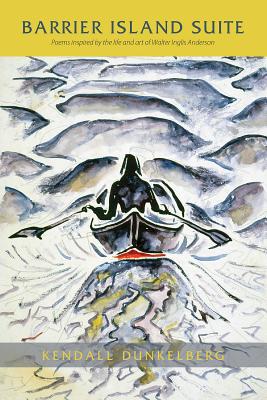
 I am incredibly honored that today’s Clarion Ledger includes a review of Barrier Island Suite, and I’m grateful for the meticulous reading that Lisa McMurtray gives of these poems. I’m also thankful to Steve Yates who organizes these reviews, which is such a great service to writers and readers in Mississippi.
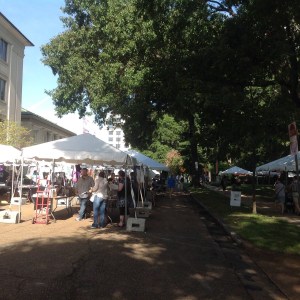 This was my second Mississippi Book Festival (also the second) and my first time as a participant. Last year at the first annual festival, I volunteered in the morning and then went to panels in the afternoon. This year, I read in the morning (11:15) and went to panels in the afternoon. Both experiences were great, and I’m planning to go again next year one way or another!
 Kendall Dunkelberg