Why all the Writer Scams Right Now?

I try not to be a conspiracy theorist, really I do. But these days, when nefarious forces loom large, it’s hard not to be. And when so many horrific things are happening in the world, from the killing of protesters and detaining of people who look like immigrants whether they are in the U.S. legally or not—or are even actually citizens—to the invasion of Venezuela to the attempt to acquire Greenland, and the list goes on and on, things like phishing emails sent to writers seem practically insignificant.

Yet I wonder.

If there is a grand conspiracy, isn’t it possible that shutting up writers might be part of the plan? Why target writers so heavily at this very moment? Is it just because the scammers think we’re all so gullible? Quite possibly that’s all there is to it, but I also wonder whether another motive is to sow distrust and thereby to undermine the value of free speech.

I would love to contact book clubs to market my collection of poems, and I would love to engage in conversation with writers I don’t know. Every scam email purporting to be a book club who will buy tons of copies of my book if I’ll just pay to help advertise it or every fake writer who sends spammy AI-generated compliments about my book or every publishing scheme that wants to buy up the paperback or movie rights if I’ll just invest in the project to help get the ball rolling or every scammer masquerading as an editor at a major publisher—every one of these scams and more make it just a little less likely that I’ll contact a book club, engage with other writers, trust an editor, or try to get my book in more markets.

Recently, I’ve seen several scammy ads on late night TV offering services to authors to help them find an agent, find a publisher, etc. These were on broadcast television, which I access over the airwaves, so I don’t think they could even be targeted at me because I am a writer, though the thought did cross my mind. I know better than to contact one of these snake oil salesmen, but what about the neophyte writer who has no idea how the industry works and can’t tell a fraudster from a legitimate agent?

Of course, vanity presses and so-called hybrid publishers have always been around. I don’t know that I’ve ever seen them advertise on TV, though. You were more likely to find them in the back of comic books. Maybe that speaks more to the devalued state of broadcast ads than to a grand, nepharious plot. And maybe writers are just the latest targets of the internet scammer set, and they will soon move on to another ploy and another group they think they can exploit. These people are making money off writers’ dreams, after all.

But if there were a force behind this craze of phony offers to writers, then it might make sense that the end game is to depress our speech by making us distrustful of each other and of the industry that supports our speech.

To learn more about the scams that are circulating out there, bookmark The Author’s Guild’s Publishing Scam Alerts blog or visit Writer Beware.

What else can you do?

Unfortunately, it is necessary to be skeptical of nearly every unsolicited correspondence you receive. Read carefully, be critical, but don’t just trash every offer you receive. I invite writers to the Eudora Welty Writers’ Symposium all the time, and I live in fear of someone just ignoring my invitation out of distrust. I write detailed invitations, laying out our terms in both the email (in summary) and in a letter and agreement form, etc. I always include a link to our website that is current and has a long history. There are news articles about prior symposia and many of the people who have been invited are well-known writers. I rely on the people I invite to look closely enough to judge that my invitation is legit and worth consideration. Many already know us, but some writers I contact each year are new and won’t have heard of us. I can only hope our reputation preceeds us.

Like me, you can do your best and maybe even redouble your efforts to build relationships, extend networks, and fight against the rising tide of distrust. Whether or not that is fostered by a conspiracy, the distrust is a side-effect of all the scams out there, and it is worth combatting whether or not it is the intended effect. Don’t be too trusting, and don’t be so mistrustful that you hurt yourself and others. Trust your instincts when something looks too good to be true, and do your research even when it does look legit.

You’ll be happier if you trust but verify than if you blindly trust or don’t trust at all.

How I revised, A Writer’s Craft

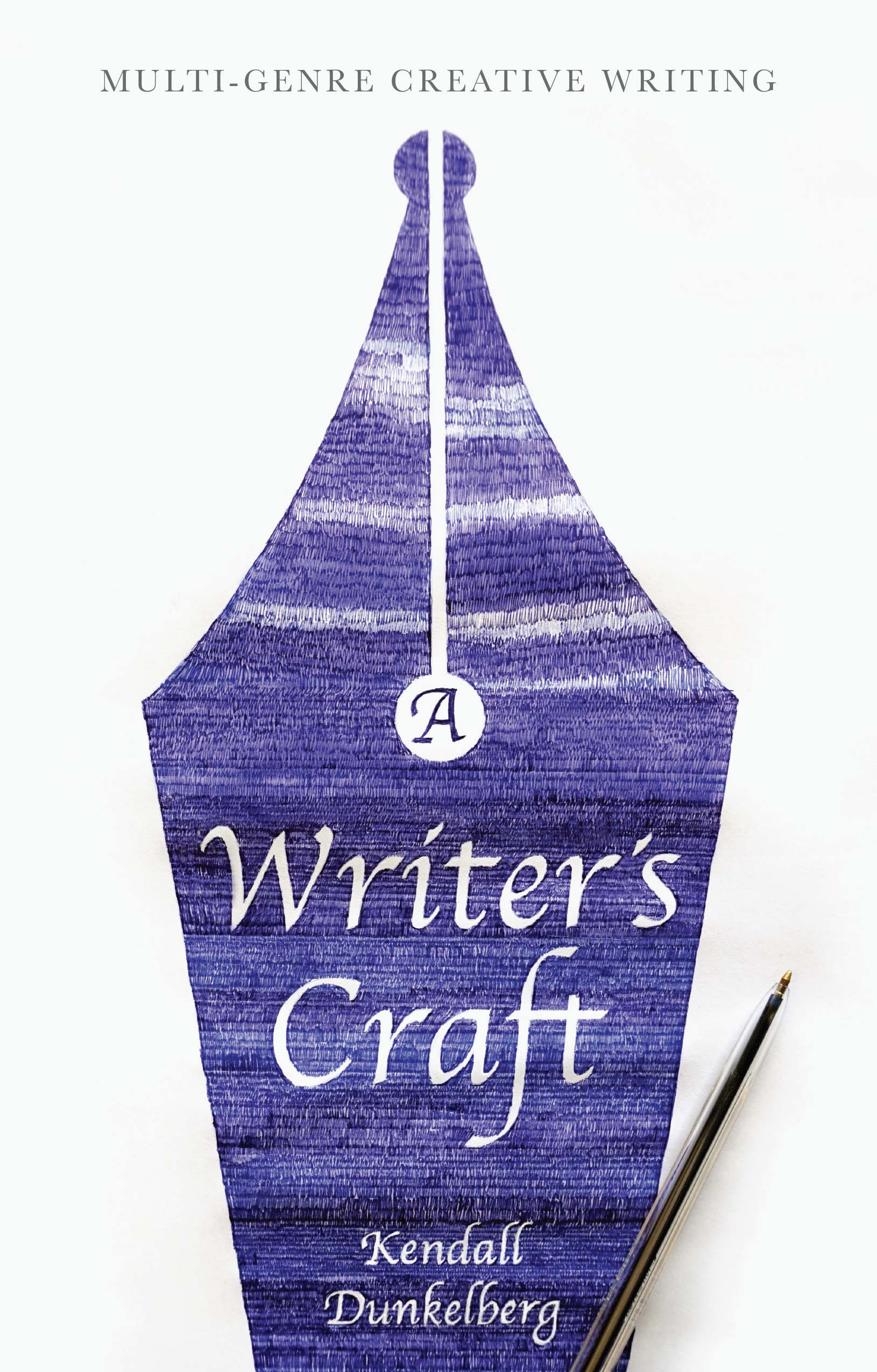
The big news of the week (besides the fact that I’m back from sabbatical and the Spring 2026 semester started this week) is that I sent of the manuscript for A Writer’s Craft: Multi-Genre Creative Writing, 2nd Edition. I’m using the first edition cover for this post because that’s where I started my revisions and because I won’t have a new cover for awhile yet, but you can bet I’ll post about that as soon as it’s finalized. We haven’t even begun talking about that yet, but I have spent the last several months of the Fall 2025 semester working on the manuscript.

When I sat down with my last good version of A Writer’s Craft, 1st Edition (always save your files!) and contemplated how I could turn it into the second edition I had envisioned in my proposal to Bloomsbury, my first thought was that I needed to follow my own $%#& advice. I knew I would need to cut as well as add, in other words. I knew I would have to be brutal and brave enough to make significant changes, yet hold to the tone and the content of the original. And may I say it felt a little daunting in August when I began on Chapter 1?

In fact, as I recall, I didn’t complete revisions to the first chapter until I had made a good pass through Chapter 2 at least. I set myself a goal of revising a chapter a week, yet in the first weeks I didn’t stick to that entirely. I did reach it by the end of the second or third week, but I moved forward through those first chapters at a somewhat different pace until I settled in and stuck to my plan. And I was okay with that.

Roughly speaking, here is my weekly schedule for revising a chapter a week. On Monday, I would read through the new chapter and make a plan for revision, consulting my book proposal and looking for other writing I had done on the subject, such as blog posts or notes for teaching creative writing. On Tuesday and Wednesday, I would rewrite, adding as much content as I felt I needed, especially coming up with examples from literature that I could use to illustrate my points, since that was one of the main comments of the peer reviews I got back. In this initial revision, I did not worry about length, but by Thursday when I made my next pass through the chapter I would both focus on cutting back to meet my chapter length target and on adding to cover any areas I missed in my first revision. Friday’s revision would usually focus on cutting every word I could, even whole paragraphs, to get back to the target length for the chapter. Then next week, I would start over again, reading and planning revisions for the next chapter, which often meant going back through the previous week’s chapter once again as well.

In other words, each week I followed the advice I give in the book. Write to get your thoughts on paper without worrying too much about the final form initially. Be willing to write words you won’t end up using in order to get to the words you will keep, and be willing to cut , reshape, and rephrase the words you’ve sweated blood getting on the page in order to make a stronger, clearer, and more concise final product. It was always important to get some distance after Friday’s “final” draft and look back the following week to see what I had done and continue to refine.

In the end, after an intense 15 weeks of revising a chapter week, I spent a week revising the entire manuscript again in one week, which helped me to catch a few inconsistencies and a duplicated passage or two. Then I worked on things like tracking down quotes and preparing the manuscript to send to my editor. I did those last tasks off and on over the holidays and as I was getting ready for the spring semester.

So, you are probably asking, what did I revise? A lot, to be honest. And a lot more than I could ever describe in one post, but I can give a few highlights. Let’s start by saying that the total manuscript went from 60,000 words to 109,477 words, so I essentially wrote another book—except I didn’t. Most of the what was in the first edition is still in the second, though I did cut a lot out as well — not content, but words. I was conscientious when revising, especially the second and third times through, to be as brutal with my original prose as I was with what had been added.

It is a leaner volume with much more tofu (sorry, I’m a vegetarian, so i don’t want to call it “meatier”). A chapter often would reach nearly 10,000 words on the first pass-through, and I would then bring it back to at most 8K. The early chapters weigh in at around 6.5-7K, and I did my best to keep the chapters on genre to just over 8K apiece. This was up from 4-6K with one outlier that was 7K in early chapters of the first edition, and 5-7K for the chapters on genre. One result of actually counting the words in each chapter is that the chapters are now much more consistent in length.

Thank you to LibreOffice who easily showed me my word count and to my editor for encouraging me to stay within my limits, even though she agreed to increase the target early in the process when our estimate that the 2nd edition would have 30% new content was clearly not enough. The second edition is has 83% more content by may calculation (based on word count). Considering that I probablly cut close to 20%, it really is like doubling the size of the book. I really did want a second edition to be worth it for those who buy the book.

Some of the things I added: a discussion of AI in the Introduction, Chapter 2, and Chapter 14 where I return to consider whether AI-generated texts are literature (there are different ways to look at it, but for one, I consider the copyright implications of AI); an expanded discussion of “reading like a writer”; a discussion of writing in other languages and bilingual writing; more discussions of cultural bias or appropriation; sections on non-Western forms of narrative structure; more sections on specific forms of poetry, including non-Western forms like the haiku, the ghazal, and the pantoum, as well as nonce forms like the Golden Shovel and the duplex; a revised discussion of narrative time in fiction; an expanded discussion of lyric essay and offshoots like the hermit crab essay and the braided essay; updated formats for playscripts, including those used outside the U.S.; a section on writing screenplays, including a format for writing a spec script; and a thoroughly revised and expanded Chapter 14, now titled “New Genres” that includes a discussion of digital writing form like the hypertext story, social media and maps, and interactive fiction. There are also new Notebook Exercises in every chapter (each chapter after the Introduction has a dozen exercises), and there are now two Group Exercises in every chapter, including some that are labeled Small Group Workshop exercises to give examples of how small group workshops might be conducted.

That’s a fairly long list, and it only scratches the surface, but it should give the idea that the second edition is much more multi-cultural (something the first edition was open to but wasn’t as explicit about) and multi-national (knowing that the book is used in England, Australia, and many other countries made me even more focused on shifting my perspective and making it more global). It is also much more specific, going into detail about forms and strategies that in the first I had left for the instructor to cover the way they wanted to. Much of that detail comes from having taught for another decade since I wrote the first edition, and having taught gradaute students as well as undergrads, and bringing some of the lessons I learned from working with my grad students into my undergraduate classes over the years. Much of that detail also comes from paying attention to what has been going on in the field of creative writing pedagogy over that decade, as well as from my own experience as a writer over that time.

I’m not a fan of textbooks that come out with a new edition every few years, but a decade is long enough, and I knew I had more to say. I just couldn’t predict how much more that would be until I really dug into the work. It was an intense 16+ weeks to revise 14 chapters plus the end-matter (appendix, glossary, and resources), and then revise the whole book again in one week. It was a wild and rewarding ride!

P.S. At no point in the process did I use AI. I chose to write in LibreOffice because a) I lost part of an early revision due to issues I was having in Word, losing a day or two’s worth of work (I have amnesia about that) and b) because LibreOffice so far does not constantly ask if I want its AI assistant to help me write (it doesn’t have one as far as I can tell). I turn AI off of my search engine, and I don’t rely on anything other than the included spelling and grammar checking functions in LibreOffice that underline words. The last thing I want is for AI to start suggestion what word it thinks I might write next. I can second-guess myself, thank you very much. I don’t need AI to do that for me.
Thanks, Fake Elena Ferrante

I got a very nice email out of the blue this morning from “Elena Ferrante, an author,” who said complimentary things about my book Tree Fall with Birdsong. Initially, I was pleased, but it didn’t take long before I got my guard up. I could almost handle someone calling themselves “an author” without much more explanation, but the things she said about my book quickly began to sound like an AI mashup of the blurbs on the back cover. Nothing was that specific, but several phrases echoed things I’d written.

I decided not to reply, but instead did a search. Elena Ferrante appears to have a website and to have written a book or two, maybe more — I didn’t spend too much time on this. Her wikipedia page is unbelievably detailed for someone known to write behind an elusive pseudonym (according to Wikipedia). That did make me wonder whether she really exists, but she may (or someone may legitimately write under that name). But when I searched on “AI email from Elanea Ferrante,” I found other references to a Fake Elena Ferrante, who sends writers messages, has short conversations, and then disappears. She (he or it?) apparently has multiple gmail addresses with her name, a number, and @gmail.com.

It’s a little unclear what the scam is, but maybe Fake Elena Ferrante just wants to see who will reply so they can put that address in their spam email list and send more garbage. Or maybe someone just amuses themselves tormenting writers with fake emails. It’s a little hard to tell what the game is, but maybe some writers really take the bait and get scammed for nonexistent services. Or maybe Elena Ferrante is just really starved for attention or thinks this is a way to get some. I didn’t reply, but I am writing about it.

I’ll never know. Now that I’ve written about it, that message will go in my trash, and I’ll chalk it up as another lesson in all the fake writers, agents, publicists, etc. who seem to be contacting writers in flattering emails, trying to sell you something or just trying to get you to take the bait.

Be careful out there, folks!

And Elena Ferrante, if you really exist, I doubt you’ve ever read my book, but if you ever do, I hope you enjoy it! Thanks for the kind words your duppleganger sent in advance, even if they sounded a lot like me.

Goodbye Oleada, Hello Ola, Subfolio, & Dapple

Over at Lit Mag Labs, they’ve been reporting on the demise of one alternative submission platform and the rise of three new ones this year.

Oleada, a quirky little submission manager that I wrote about awhile ago and even used once or twice, is soon to be no more, at least according to Lit Mag Labs. On the Oleada website, I didn’t see an announcement, but Lit Mag Labs says it will be phased out in February 2026 to be replaced by Ola.

So far, at Ola, I can only see information about the features publishers will have and the pricing publishers pay to host calls for submission there. So far, it’s a little unclear to me how writers will submit work on Ola and how they’ll track their submissions. From their Roadmap page, it looks like it will be six months or more before the site is fully functional, though maybe they’ll have some early adopters up and running before then.

Another new submission platform that is getting some attention is Subfolio, where users can login and where there are several actuve calls for submission, including from magazines like Agni, River Styx, and One Art. A few other publishers have created landing pages but currently don’t have open calls. Lit Mag Labs has a recent interview with the creator, which is especially enlightening for magazine editors. Of course, it is early days, but Subfolio appears to be based on a stable, working prototype and seems to be gaining traction. Publishers can get full details on pricing and features here.

Finally, Lit Mag Labs turned me on to Dapple. Read the Lit Mag Labs interview here. As with Ola, I can see how things are supposed to work for publishers, though I haven’t explored that fully yet, but I can’t see open calls for submission or tell whether those will be hosted at dapple.com or whether magazines will have their calls listed on their website. Will there be a discover feature, as there is on Submittable and Subfolio? Or will writers find calls. Will writers need to set up an account at Dapple to submit? Or will that happen through the publisher’s call. I haven’t had time to explore their site too much yet, so I’m curious how it will work from the writer’s perspective.

Wrangling Walmart Customer Service

Every now and then, I use this blog to post a rant about customer service or tech issues. Since I’ve just spent a good 30 minutes on a chat with Walmart, I thought it might be good to relate my experience here, so apologies in advance for the rant. I hope it might help someone else in a similar situation.

First a little history. Even though I usually try to avoid them, I ordered a $60 item from Walmart because they had a good price. So did one other store, but I would have had to pay shipping and I happened to have Walmart+ so shipping was free. There’s a long story for why I had that, but to keep it short, it involved ordering something else a while ago and accepting a free trial of Walmart+ to get it on time — isn’t that how they get you?

Back to Christmas shopping. I grabbed this Black Friday deal for the free shipping and 1-day delivery (not that I needed it that soon), but the next day instead of delivering it, Walmart cancelled my order, saying it was out of stock at my store and had been scheduled for delivery from the store, even though that wasn’t what I originally chose for a shipping option. Walmart+ should have given me free 2-day shipping

Disappointed, I checked again online and found that the other store no longer had the same deal, but I could order again from Walmart, who seemed to have stock even though they cancelled my order. After searching for anyone else who had the same item at that price and coming up empty, I decided to try ordering again in hopes they would ship from their warehouse if the store didn’t have it in stock. My second order went through, and they showed there were 9 items in stock.

A day later, my order status again changed from shipping to delivery from store, but this time it got stuck on “Assigning a driver” and eventually by evening, the status changed to Delayed, which is where it was stuck this morning. So I decided to try chatting with Customer Support, which was a bust.

To get to Customer Support, I had to view my Purchas History, then View Details on the order that was delayed. On the Details screen there was a link to chat with Customer Support. Initially, I got their AI bot in chat, and it obviously couldn’t handle an issue like mine. After trying it with a few questions and getting nowhere, I decided to try an old trick from automated phone customer service lines. I typed “Representative” in the chat window, and that sent me to an actual person: Isiah.

He or she tried to be helpful, but we didn’t really get anywhere. I did get a little information after half an hour waiting for him to try to find a solution. It does appear that the item exists and is waiting to be delivered. They are trying to find someone to deliver it to my house. I offered to pick it up at my local store or to have it shipped, but they weren’t able to change delivery. That does make me suspect that the item isn’t in my town but is in the next town over, which is about at 20-minute drive for me. Not something I want to do unless it’s the last resort.

Apparently, there is no stock in the warehouse, but there is stock in a local store, so that’s why delivery keeps changing from 1-day shipping to delivery from store. I’d be happy if I got the item within a few days. Standard ground shipping would work for me, but they won’t do that. And they apparently can’t let me pick it up. So I’m stuck in limbo.

Isiah told me that if the item doesn’t arrive by 8pm tonight, I could contact them again and cancel the order. I said I didn’t want to cancel it, but would demand that I get it at the original price. Right now, Walmart lists it for $33 more than I paid. I would consider it bait and switch if I have to pay that much more for an item they canceled twice even though they had it in stock but can’t figure out how to get it to me.

My main takeaway is that I’ve been right to avoid Walmart like the plague all these years, and I’ll try to return to that policy and not be tempted by free shipping offers.

The other takeaway is that you can get to customer service, but often it isn’t easy. Even the chat feature was hard to find, and then I had to deal with a bot before I could type “Representative” to get to an actual person. Next time, if I have to go through all of that again, I’ll ask to speak with a manager, and I might choose the option to have them call me instead of doing it by chat. At least then I’ll be able to express my frustration verbablly and not be held hostage in chat while they put me on hold.

Update: Walmart did come through. My item was delivered this afternoon. Maybe it would have turned out this way even if I hadn’t called customer support, but I have to believe that the squeeky wheel gets the grease and that calling did make this order more or a priority. Of course, none of this would have been a concern if they hadn’t cancelled my initial order and then raised the price after my second order so that I was looking at a steep price increase if it got cancelled again.

Pay to Give Away

Back in 2016, when Barrier Island Suite came out, I did a giveaway on Goodreads with a fair amount of success. Looking back, I gave away five copies and had nearly 500 people sign up to get one. The cost to me was the cost of five copies plus postage. I was okay with that. Did this actually result in sales? I have no way of knowing, but it did get some attention.

This summer, when I went back to Goodreads to set up another give-away for Tree Fall with Birdsong, I was surprised to see that they are now charging a fee to set up a giveaway: $119 or $599 for a premium plan.

Now, you might say that $199 isn’t too much to pay for advertising, but it did give me pause. I’m not planning to make a lot from a poetry collection, and in addition to the fee, it would cost me to provide and mail the books. By my calculus, it wouldn’t be worth it. If I did want to give copies away, there would probably be another way to do it on social media, though in the end, I chose to expend my efforts on in-person and virtual events, as well as interviews on Southern Review of Books and Mississippi Arts Hour. These seemed like better platforms for spreading the word about my book, and I wouldn’t be paying money to a subsidiary of Amazon.

If I were trying to build interest in a blockbuster title, my calculus might have been different. I can even see paying for the premium plan if it were part of a marketing campaign and if my publisher were behind it and willing to give out more copies than I could afford. If this led to more reviews and a greater presence on Goodreads, it might be worth it, especially if my book was the kind of book people care about there. I would want to know that there was an active community of readers who I could reach wiht my investment.

On a related note, I’ve been checking out a couple of other book social media sites, though so far they haven’t impressed me very much. StoryGraph is one that looks promising, but when I search for poetry books, I don’t see very much. They categorize books as either Fiction or Nonfiction, and poetry is a genre under Nonfiction. They claim to be able to find other readers with common interests, but so far, no one comes up for me, and they don’t give me any book recommendations. I suspect that’s because they haven’t figured out poetry yet.

Similarly, I had trouble finding books I’m reading on Page Bound, though it was easy to add them. All I had to do was go to Goodreads and copy the link to the book there, which seemed a little odd since Page Bound is billed as a Goodreads alternative.

I didn’t find a giveaway feature on Page Bond. On StoryGraph, there is one, but I couldn’t see how to sign up as an author or register to do one. I wasn’t too disappointed by that fact, since neither site seems to be all that interested in poets and I susspect that their reader base is more attuned to fiction.

Welty Symposium Recap

It is always nice to get past the Eudora Welty Writers’ Symposium at Mississippi University for Women and be able to look back at the fond memories of the weekend. We had lovely weather, as usual for this time of year (though the rain set in Saturday night once everyone was gone), and we had even better company.

The readings were fabulous, starting with Ashley M. Jones, who took us through her four collections. Ashley is always a delight to host, and she focused on poems about family and heritage in connection with our theme, Secrets and Revelations: A Dark Thread Running Through My Story. In her family’s case, that dark thread has more to do with the history they were part of than any personal dark secrets. Here you see Ashley and me at the book signing table after her keynote. Thanks go my former student Magnolia (Jane) Dill, for offering to take the photograph.

Friday morning, we heard from Dr. drea brown, the Welty Prize Winner, whose book Conjuring the Haint looks at haunting in the poetics of Black women, a fitting topic after the previous evening’s reading. Ashley Jones isn’t considered in brown’s book, but who knows, after the symposium maybe they will become better acquainted and brown will consider Jone’s work in another context.

I won’t go through the whole list of writers, but you can watch any of the sessions you missed on our playlist at YouTube. We had a good crowd for each session, and there were some great conversations in the Q&A. Here you see one of our MFA students asking a question of Robert Busby, author of Bodock. It was great to hear fellow poets Kathleen Driskell and Olivia Clare Friedman on Friday, along with Carrie R. Moore, Rickey Fayne, and Addie E. Citchens.

My session was Saturday morning, and I kicked it off at 9:30 reading poems from Tree Fall with Birdsong. I had a good time reading, and I hope the audience enjoyed it as well. I also loved getting to know debut nonfication writer Jordan LaHaye Fontenot through her work, Home of the Happy, as well as being introduced to fellow poet (who is now at Mississippi State) Samyak Shertok through No Rhododendoron and hearing Lauren Rhoades read from her memoir Split the Baby.

Now that the symposium is over, I’m continuing my work on the second edition of A Writer’s Craft. This week’s chapter is the one on poetry, and though that is fun and familiar ground to tread on, I also have so much I want to say and I want it to be just right, so I have plenty of work to do!

And I’m not done with readings yet, either. Coming up next month, I’ll be visiting the Brandon Public Library on Nov. 4 and The Author Shoppe in Hattiesburg on Nov. 15. More on both of those readings soon.

For more about the Welty Weekend, read my follow-up post on Substack.

Eudora Welty Writers’ Symposium 2025

It is time for the 37th annual Eudora Welty Writers’ Symposium this week. We have another great line-up this year, and I will be on it. Since I’m on sabbatical, I also won’t be actively serving as director, though I did line up the authors and have helped out as much as I could in the background, so I still count it as my 18th year directing the symposium. My colleague Kris Lee has been taking on the day-to-day operations as acting director since August, though.

As you can see on the flyer, our keynote writer is Alabama’s poet laureate, Ashley M. Jones, who will read from her fabulous new collection Lullaby for the Grieving. Our theme is “Secrets and Revelations: ‘A Dark Thread Running Through My Story,'” which is inspired by Eudora Welty’s novel Losing Battles. The quote is said by the character Miss Gloria, who as an orphan has many unanswered questions about her heritage, themes that Jones takes up in her own way in her poems, mourning the loss of her father and also looking to her ancestors and community.

Other poets include Kathleen Driskell, Olivia Clare Friedman, myself, and Samyak Shertok. We will also hear from drea brown, our Welty Prize scholar whose book Conjuring the Haint explores the importance of haunting in the poetics of Black women.

Novelists include Addie E. Citchens and Rickey Fayne, and Robert Busby and Carrie R. Moore bring short story collections. And finally, Jordan LaHaye Fontenot and Lauren Rhoades will read from their creative nonfiction. We will also hear from the five Ephemera Prize-wining hich school students on Friday afternoon.

I hope you’ll be able to join us for all or part of the symposium, which is free and open to the public. If not, we’ll also live stream the event on our YouTube channel, where sessions will also be archived. I’m excited to joine this wonderfuld group of writers and to read from Tree Fall with Birdsong on Saturday, Oct. 25, at 9:30am.

WordPress Renewal Phishing

Today I got a couple of emails reminding me that my WordPress renewal is tomorrow. I thought that was odd, since I’m on auto-renew and don’t have to manually pay my bill. That’s when I noticed the email was from a user at “hosting.com” and the link address was to some long url that wasn’t associated with WordPress at all.

I’m pretty cautious about clicking any links in email, and I was already suspicious from the outset, but it did look like a WordPress reminder. And my renewal is coming up, though not tomorrow, by the way. I went into the app and checked, also checking to make sure my payment info was still correct. Everything is good, and I can delete that email. But first I thought I ought to post about it as a reminder and a warning to other WordPress users.

Of course, one lesson is to never click a link in an email unless you trust the person who sent it to you. Even then, double-check, since it could be someone masquerading as that person or company. I’ve seen this kind of phishing from PayPal and Amazon and countless other places, but this is the first one I’ve noticed that was spoofing WordPress.

So far, I haven’t fallen prey to any phishing attempts, but I’ve known plenty of people who have, even people who are smart enough to be careful. It happened to my mother once, but fortunately she talked to me and we were able to extricate her before any irreparable damage was done. It happened to a colleague whose husband happened to check in on her before she got too deep into a call. I say this because we can all become too stressed out, confused, or just rushed and then do something we regret. The last thing I want to do is to think that it couldn’t happen to me.

But the only way to keep it from happening is to stop and think before clicking, which is not always easy to remember. Look for anything suspicious. Hover your mouse over that link to see if it goes where you think it goes, or better yet, close that email, go to the app or the website and verify for yourself whether there’s anything you need to do. If there is, there will be a notice on your account. An email or text will not be the only way a company will notify you.

Though this attempt at phishing didn’t fool me, I can see how it could. Be careful out there! And stay safe.

Visit to Vicksburg

Kim and I had a great time visiting Vicksburg this past weekend. The main purpose of the trip was my reading, organized by Lorelei Books at the Old Courthouse Museum during the Bicentennial Fall Flea Market. More on that in a moment, but first, let me tell you that we had a fabulous time and found Vicksburg to be such a charming city. I’d been there once before to read at Lorelei Books and enjoyed the quick trip, but Kim and I had never been there together.

We stayed at Halpino, one of the properties associated with the Duff Green Mansion. It’s a small BnB-style lodging with four or five rooms and a common kitchen area. The furniture was all antique or at least in the style, and though there were a few of the kinds of quirks you expect in a place like that, we had a perfectly wonderful stay. There was no iron or hair dryer, though, so it’s a good thing I brought my clothes for the next day on hangers and Kim packed her blow dryer. There was coffee in the shared kitchen, though you had to get water from your room because there was no sink. That and the code to the front door were things we figured out along with another couple who were staying there, so we got to know them a little more than we would have in a hotel, which was fine. The room was clean and the bed slept well, so really, what more do you need? It was also the least expensive decent room I could find, so I’m not complaining.

In the morning, we went over to Duff Green for the included breakfast, which turned out to be a sit-down 3-course affair that we were served. The food was quite good, and we were seated with another couple and a young woman who was in town for a funeral. There were several other people at our table, but these were the ones we were sitting closest to and with whom we conversed over breakfast. After the meal, we took advantage of the included mansion tour, which really was just of the ground floor rooms, but we learned a bit about the history of the home: for instance, it was at one point a hospital that housed both Union and Confederate troops, which may have saved it from shelling during the siege.

After breakfast we stopped by the bookstore and then headed over to the flea market to have a look around. For an hour or so before the reading, I sat at Lorelei Books’ table and talked to people about Tree Fall with Birdsong. Lorelei’s owner, Kelle, called over a few friends and between them and a few people who wandered by, we rustled up a nice, small crowd for the reading. One draw was that it was indoors in the old courtroom, which was air conditioned. A few people wandered in and out, but several stayed for the full reading and discussion. We talked about the poems, and also about The W’s low-residency MFA program and the Welty Symposium, which I had mentioned in my bio.

Along the way, I met the husband of a former student. The husgand is an architect working on a project to shore up the stone wall around the base of the courthouse lot, and his wife, Tarasa, is now a teacher in the Jackson area. Unfortunattely, she wasn’t able to come along, but it was great to hear what she’s been up to and how successful she’s been in the twenty-five years since she left my classes.

After the reading, we headed downtown to grab a little lunch, though we settled for ice cream from the store where Coke was first bottled. We didn’t tour their Coke museum, but instead headed down the street to the HC Porter Gallery. We probably would have spent more time with Porter’s art, the woman working in the gallery turned out to be an MSMS alumna, so we got to talking about all the latest news from campus. She was a friend of Emma Richardson, so we promised to say hello, and she is also a writer, so we talked to her a bit about the symposium and the MFA program, too.

From there, we went to tour the Vicksburg National Military Park, since we had heard it was still open despite the government shutdown, thanks to a local group that was funding it. There also was no entrance fee, though we donated more than what our fee would have been to the Friends of Vicksburg National Military Park in gratitude.

If you haven’t been to the park, it is definitely worth a visit. We only wish we had left enough time to drive the full 15 miles of park road. We did make it through most of the Union side and to the military cemetery and remains of the USS Cairo, an ironclad wooden battle ship that was sunk in the Mississippi river and thus preserved. Other river battleships were torn apart and used for scrap or repurposed after the war.

We’ll have to return another time to see the rest of the park. We’re already thinking about planning a trip next September for a new art festival that the RC Porter Gallery started this year. It looks like a serious, juried art show with nationally known artists. If that keeps going, it will be a great boon to the arts world in Mississippi. We also met the woman who runs the Catfish Row Museum and would love to go back to visit that, and there was the Manhattan Short Film festival on Saturday night, which we were tempted to stick around to see.

But unfortunately, all good things must come to an end. When the park closed at 5, we headed on back to Columbus, stopping in Clinton for dinner and getting back by about 9pm. It was a quick trip, yet a rewarding one, and a good reminder that we just need to make the effort to do a few more day trips to places we haven’t yet explored in Mississippi, or to go back and explore of the places we have started to get to know.