Spiced Cocoa Pecan Recipe

I’ve made these a couple of times with a few additions (the butter and granulated sugar) the second time. Either way worked del and is very easy to do. This recipe is a bit of a combination of what I did. I got the idea from a recipe I found online, but adapted it. The idea to use powdered sugar and cocoa powder came from the original recipe. The corn starch in the powdered sugar helps the cocoa powder adhere to the wet pecans. I increased the amount of cocoa considerably and the second time added butter for a more chocolatey flavor. I was happy with this, though if you want a low-fat recipe, I’ve included instructions to leave the butter out below.

Ingredients:

1-2 quarts of pecans (adjust amounts below as necessary — this recipe has made between 1.5 and 2 quarts)

1/2 cup of powdered sugar

1/4 cup granulated sugar (we use organic raw sugar, not white sugar)

1/2 cup cocoa powder

3 Tbs butter (optional)

olive oil

salt

spices (cayenne, cumin, cinnamon, cardamom — to taste, 1/4-1/2 tsp each)

Mix sugar, cocoa, salt, and spices in a large bowl. (The first time I did this, I used 3/4 C powdered sugar and no granulated sugar; the second time I used 1/3 C powdered sugar and 1/3 cup granulated sugar because I was low on powdered sugar and wanted the more intense flavor of some granulated sugar. Based on these two experiences, I’m suggesting 1/2 powdered sugar if you’ve got it to help the coating stick and 1/4 granulated to get the taste).

Rinse pecans in a colander under cold water. Shake off excess water.

If you don’t want to use butter, then you can skip this next step: Melt 3 Tbsp butter with olive oil (to taste), then put melted butter and oil in a cookie sheet (with 1 inch sides) and mix the nuts in the butter and oil in the pan.

If you don’t do the butter and oil, then spray the pan with a little oil to keep it from sticking.

Mix the wet pecans in the bowl with sugar, cocoa, and spices until well coated. The pecans should absorb all the dry ingredients, but if not, you can add more wet pecans. Spread pecans in the baking pan.

Bake at 300° for about 20 minutes, stirring occasionally so the pecans don’t stick to the pan or to each other. Remove when nearly done and when the coating is getting dry. They will continue to cook as they cool.

Unexpected Pleasures

One of the challenges of living in a small town can sometimes seem to be the lack of culture. There’s actually more to do than you might realize, and sometimes it’s just that you can’t find the time to do it. Life can keep you busy, but getting out to enjoy some culture when it comes around is vital to recharging those batteries. This spring we’ve had a couple of nice surprises in the form of live music.

The first came when Jim Brock invited Aidan to come play a song with his band, The Echoes, at the dance they play every 1st and 3rd Saturday nights. Though it was a busy Easter weekend, we knew we wouldn’t have another opportunity to do it anytime soon — Aidan’s soccer schedule aligned with the next several weekends, so he would be out of town. So we drug ourselves down to the dance a the senior center and had a blast. The music was old-time country. The people were more than friendly. Had we known, we might have even brought some food for the potluck at intermission. It turned out we’d met one of the dancers at a rest stop in Oklahoma a couple years back — the Mississippi plates with Lowndes County got their attention then — and all of us got on the dance floor. I’m not well versed in the two-step, so I was the most reluctant (and line dancing is not up my alley, so I didn’t even try to go their). I don’t think I broke anyone’s toes, but I might need to practice before we decide to go back, which I’m sure we will. Aidan played Faded Love with the band (on Mr. Brock’s fiddle). It was a lot of fun.

An even bigger surprise came when we learned that Tish Hinojosa was coming to town. I’ve known about Tish since my days at UT Austin, and have always enjoyed her music. The chance to see her live in a solo show it Columbus was just too good to pass up — and the ticket price couldn’t be beat — even though the concert was on a Wednesday night in a week when all kinds of grading and final reviews are coming due, not to mention committee meetings, awards days, a Suzuki performance, and coming on the heels of a long soccer weekend for Aidan and Kim. We almost didn’t get it together to get our tickets and drag our behinds out of the house, but we did, and we certainly enjoyed it. Tish is still singing in top form, though it’s been at least fifteen years since I last heard her live. The Arts Council space is so intimate, we were in the last row and still only a few feet from the stage. We bought a CD and had it autographed. It felt like having the artist in your living room. It is the kind of thing that doesn’t happen often in small town Mississippi, so we knew we had to take advantage of it no matter how tired we might be the rest of the week. And it was definitely the right choice.

Tish is traveling on a long driving tour of the US (her home these days in Hamburg, Germany), and will be playing lots of small venues along the way it seems. Check her website for the  tour dates. Make time to go out and see her, if she’s coming anywhere near you. Or if you can’t do that, find another live music venue, even one as unassuming as the local senior center if there’s a dance, and take a break from your daily routine. You’ll be glad you did.

Catching Up

This is just a quick post to apologize to any regular readers this site may have had… The past few weeks have been very busy, and I haven’t found time to post. What have I been up to? On March 29-31 I took a couple of W students to Lipscomb University in Nashville for the Southern Literary Festival — great time, and a great festival open to all schools in the South who become members of the association. Saw a great play, written by Tina Howe and performed by Lipscomb students and local professional actors, heard readings, and went to talks about writing. I also got to enjoy some of the student 10-minute play readings performed on Saturday morning. The weather was great, too!Hot Cross Buns

The following weekend was Easter, of course, so we did the traditional hot cross buns and eggs, sandwiched between grading essays and exams. In real life, I’m an English professor, which means if I travel for a weekend, I get way behind in my classes. Worth it, but you pay…

In the midst of all of that, I’ve been working all year on our web team to redesign the MUW website. We are working with a consulting firm and have had lots of communication back and forth about what we want for a design. I’m also on the search committee for webmaster, and I’ve learned more about Joomla! than I care to know.

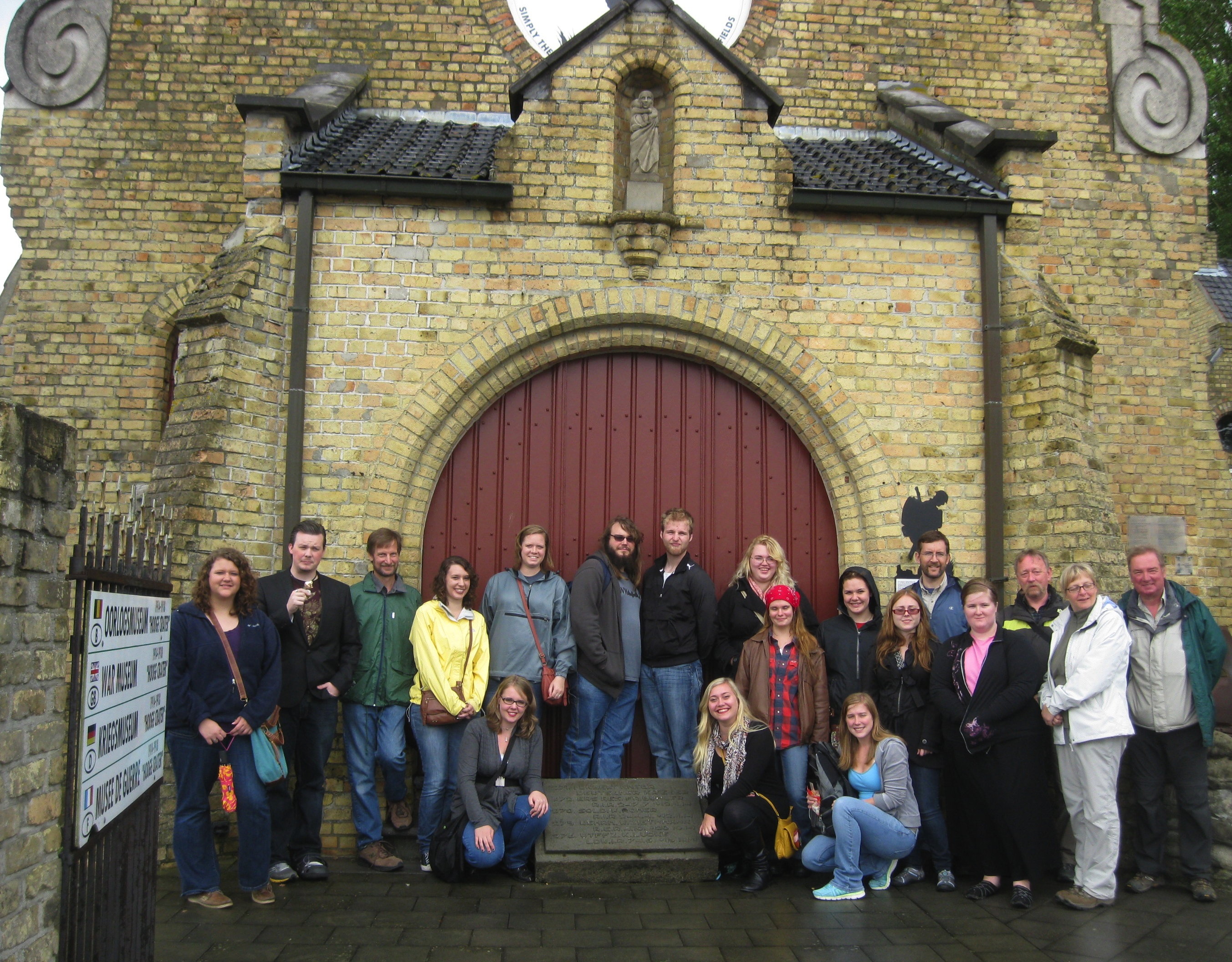
And I’ve been working on my class on Belgian and European poetry, drama, and art for the study abroad trip I’ll be leading to Brussels this summer. We covered Symbolism, Dada, and Surrealism last week as an introduction. There are one or two details of that trip yet to be worked out.

The other major activity has been to help my mother sell the Motorette — but that story will have to be a separate post soon. It’s been a fun and interesting ride.

Two more weeks of classes and one week of exams, then things ought to settle down for a little while. In the meantime, I’ll try to work in a post or two! Maybe a recipe or two or some thoughts on poetry.

Savory 3 Cheese, Herb, and Nut Mini Muffins

This recipe was first made for the MUW Sigma Tau Delta initiation ceremony this year. It is heavily adapted from the Basic Whole Wheat Muffin recipe in Ed Brown’s original Tassajara Bread Book, along with the Tassajara Cooking one of my original cooking bibles that I get out occasionally when I really need a basic recipe to work from or with.

1 C wheat flour

1 C white flour

1 Tbs baking powder

1 Tbs sugar

1/4 tsp salt

1/4 olive oil

2 Tbs chopped fresh rosemary and sage (or other spices to taste)

1/2 C chopped pecans

pepper

2 eggs

2 1/2 C buttermilk

1 C each crumbled gorgonzola, grated mozzarella, and grated cheddar cheese

canola oil & corn meal

If you know me, then you know these measurements are approximate, all except the flour, which was pretty accurately measured.

Preheat oven to 400°

Mix the dry ingredients (flour, baking powder, salt, and sugar in a bowl. Stir together well to blend and then make a well in the middle. Pour in about 1/4 C olive oil. Add two eggs and buttermilk. Stir to mix (just until blended), then add herbs, pepper, and nuts. Blend in a little. Add grated and crumbled cheeses and stir to mix together.

Spray mini muffin tins lightly with canola oil (I use a Misto sprayer, though PAM would work). Sprinkle the bottoms of the cups lightly with corn meal. Spoon batter into cups about 2/3 full (don’t fill too much — they look nicer when they don’t overflow the cup). Bake at 400° about 15 minutes  until done (test with toothpick. Makes about 4 dozen mini-muffins, if you don’t over-fill the cups. Since I had two pans, I made half a batch, washed, rinsed, and dried the pans and made the other half. They turned out very light, very savory, bite-sized muffins. I don’t know if I’d want a full-sized muffin with this recipe — might be too much. But the mini-size worked great. We’ll see how people like them at the initiation tomorrow!

Careers for English Majors

As I prepare for a presentation on career prospects for English majors (or should I say job prospects), I thought I would try out a few ideas here. Have you ever noticed that people seem to think English is an unmarketable degree? That’s been the case for as long as I can remember, but it hasn’t stopped the many English majors I’ve known from getting jobs and making a living. What those jobs are, though, can vary tremendously.

Though there isn’t an automatic career path for many English majors, the skills you develop in your English classes are actually in high demand in the workplace. The most obvious skill English majors have is the ability to write. This is usually more than just writing grammatically correct sentences and spelling words correctly — though that can be a huge benefit. Good writers understand how to craft an effective sentence, not just a correct sentence. Good writers know how to organize a paragraph clearly and concisely, and they know how to structure an essay, which can transfer into structuring anything from an email (or tweet) to a hundred page report. English majors should be good communicators, both in written and in oral form.

This can lead to jobs in many fields, though there aren’t recruitment fairs that focus on English majors. Typically, an English major has to make his or her own way. You have to knock on doors and get your resume out there. You have to be willing to start at the bottom rung and work your way up, and you might be able to do this in any field, especially if you have an interest in it.

Good jobs for English majors to consider might be working in arts agencies or museums. Sales and advertising might be worth pursuing, especially if the product you’re selling is one you’re passionate about. Consider working in a bookstore, if you love books. Technical writing doesn’t have to be about boring subjects (though it might be, and might pay the bills); it can be about subjects that you care about: the environment, music, gaming, film, social media, etc.

And don’t forget that one of the skills you’ve learned as an English major is to research. Though you may not continue doing academic research unless you go on to graduate school, your ability to formulate successful search queries, you ability to analyze and evaluate sources, and your ability to synthesize the information you have gleaned in your research and harness it to an argument, will all come in handy on a variety of jobs. And English majors are typically known to have a good work ethic, to be able to work well on a team, and to meet deadlines. Though I wouldn’t put that on my resume, you can use it to your advantage when on the job, as well as when you are looking for a job.

Carrot Loaf with Mushroom Gravy

Tonight was one of those “cook what’s in the fridge” nights. Carrots were destined to be a main ingredient, and since it turned out pretty good, I thought I’d write down what Aidan and I did.

Half an onion

One clove of garlic

1/4 cup fresh cilantro

5 carrots (give or take)

1 cup or so of bread crumbs (about 3 slices of homemade whole wear bread, cut into cubes)

diced green pepper

2 eggs

2 Tbs Yogurt

2 tsp worcestershire sauce

Salt & pepper to taste


In a food processor, shred onion and garlic. Add bread cubes and make into crumbs. Add chopped cilantro and pulse to combine. Add salt and pepper to taste and pulse. Remove the chopping blade and put on the grating blade. Grate carrots into mixture (or if your processor is small, transfer ingredients to bowl before grating carrots). Transfer all to bowl and stir in 2 eggs, yogurt, and worcester sauce. Mix well, then transfer to greased loaf pan. Bake at 400° for 30-35 minutes (or until done).

If desired, make mushroom gravy to go on top. Sauté half an onion and several mushroom in butter and olive oil. Add 2 Tbs corn starch to 1/2 cup water and mix well. Add corn starch mixture to mushrooms when they have browned. Add more water, milk, worcestershire sauce, mushroom soy sauce (to darken the color), salt, and pepper to taste.

When the carrot loaf is done, cut in slices and serve with mushroom gravy on top.

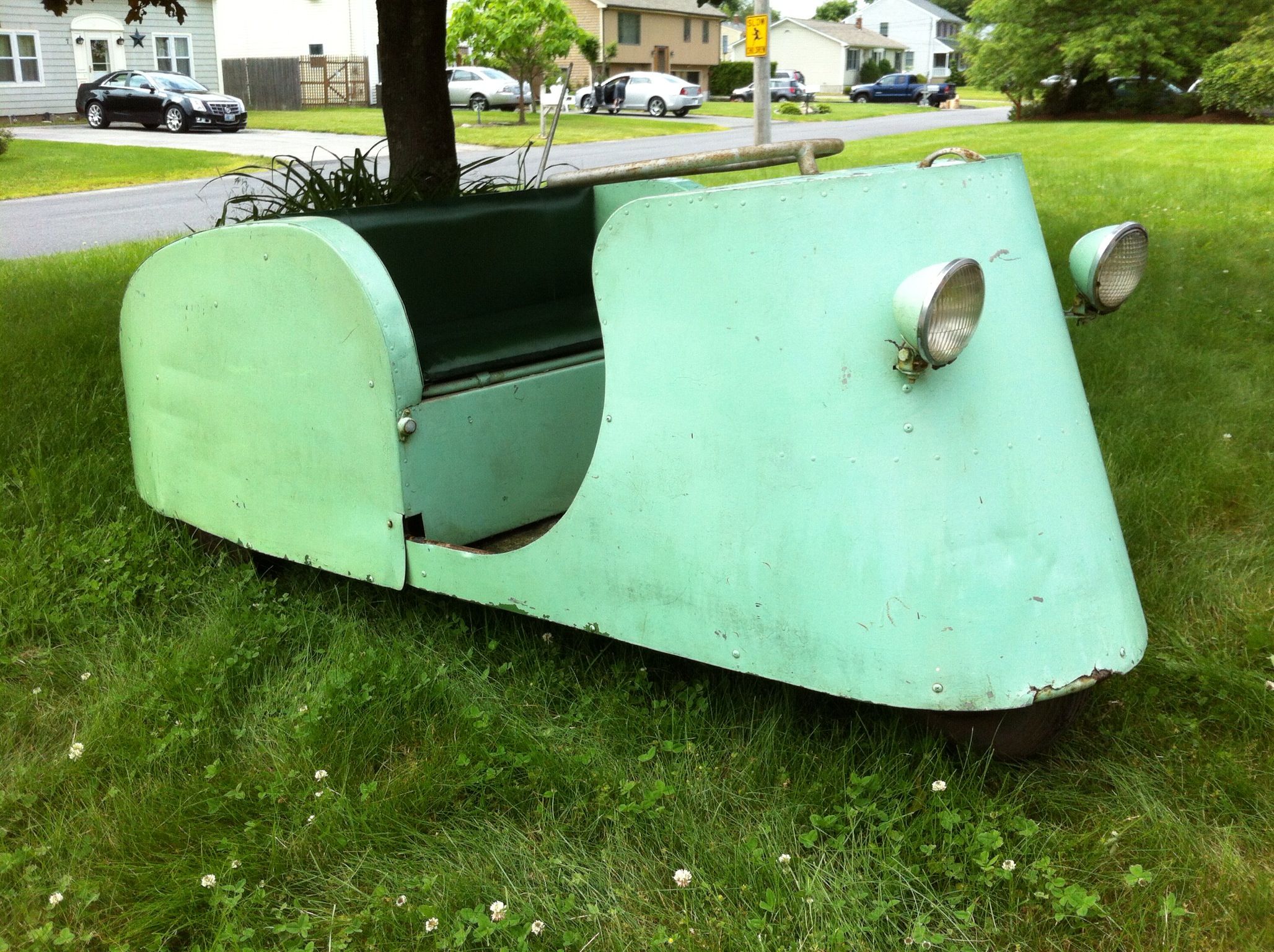
1946 Motorette

When I was a kid, we had a magic green scooter that stayed in this corner of our yard outside my parents’ bedroom window. It was a place of much imagination. My brother, sister, and I would climb on it with some of the neighbor kids, pretend to flash the lights, pretend to steer, pretend it was an airplane, a space ship, a hovercraft, or any other sort of enchanted conveyance we could dream up. We took many trips without ever moving an inch. Or it was a convenient place to sit and watch the other kids play tetherball. Or it was a convenient base for tag.

Every summer, my dad would work on the engine. When I got older, I got to help him gap the spark plug, clean the connections, clean the carburetor, lubricate the cylinders, change the oil, then crank the engine until it would cough into action. The engine had a small glass bulb gas reservoir that fascinated me. Though the scooter sat outside all winter (in the fall my dad winterized it), he always got it running. Then we’d go for trips around the yard, and sometimes down the alley to the little city park down the block. Everyone got a ride, though our dog, Hector, probably didn’t ever sit still long enough to qualify as a passenger. I remember one photograph of my grandma and grandpa riding the scooter, though I don’t recall whether they actually took it for a spin or only sat in it to pose for the picture. Now and then us kids even got to drive, and I remember once or twice someone, maybe even my dad, taking a left turn a little too sharply, causing the scooter to tip up on its side. It never flipped over, but would come to rest on the bottom of the frame, and could easily be pushed back on all three wheels.

One summer, we gave it a fresh paint job and a new cover for the seat. I decorated the scooter with bunting, attached a few little flags, got a big bag of candy to throw, and drove it in the Fourth of July parade. Since my dad had kept the motorcycle license current, I was able to drive it on the street, even though I wasn’t old enough to drive a car. I was only allowed to go under 20 miles an hour and take it to, from, and along the parade route. I had a blast, driving my dad’s antique motor scooter. And that’s probably when I learned that it was a 1946 Motorette.

My dad bought it after getting out of the Navy after WWII and after he had rehabilitated from polio that he contracted on a trip to Chicago. He went to Des Moines to attend Drake University and go to law school, and he needed a cheap vehicle that could make it around campus and up and down the hills. The Motorette fit the bill exactly, or almost. He had a hand control added that would allow him to use the brake and the gas, and he modified the back end to add a Model A transmission. The Motorette’s Mercury Clutch was perfect, since it didn’t require a pedal. With the new transmission, he had more gears and could go in reverse. He also could shift gears using the gear shift lever that stuck out the back behind the driver’s seat — not real handy if you had to change gears a lot, but perfectly acceptable for his needs. Later, he when he had moved to Osage and owned a home, he modified it slightly again so he could pull a lawn mower behind it, though by the time I was old enough to remember, us kids were the more reliable lawn mowers in the family, and the scooter was in semi-retirement, only brought out for the occasional rides around the yard.

Sometime after my famous ride in the parade, we stopped starting the scooter in the summers. Eventually, it got stored in our garden shed, where it has remained for the past 20 years or more, protected from the elements and up on blocks. If I were more of a mechanic, like my dad, I would dream of getting the engine running again and taking it for a spin.

Soup and Salad (in one bowl) Recipe

One of our favorite winter meals is homemade soup. It’s so easy that it’s hard to imagine buying soup in a can. This recipe is a variation on one soup we love, a white bean and pasta soup. Virtually any combination of vegetables will do. Broth isn’t really necessary with a bean soup, just salt the water to taste (it takes more than you might think, but the sodium content will still be much lower than with processed soups). And this is vegetarian.

One bag of white beans
1/2 lb elbow macaroni or other shaped pasta
1 leek
1 large parsnip
2 carrots
black olives
crushed tomato (about 10-12 oz)
portabella mushroom
grated parmesan cheese
baby salad greens, spinach, or lettuce

Soak a bag of white beans in water over night (or in this case, I started the soak in the morning and cooked it all up in the afternoon). 6-8 hours later, drain beans and then cover with plenty of water again. Bring to a boil, then simmer for an hour or hour and a half. After half an hour or so, clean and slice the leek. (To clean, cut lengthwise down the middle and then rinse out the dirt. To slice, cut crosswise in relatively thin slices. I use all the leek unless the tops are too dry.) Sautée in a little olive oil as you cut the parsnip and carrots into relatively small pieces. Add to sautéing leek. Once the vegetables are hot and starting too cook, add to the simmering beans. Cut mushroom and add to soup with black olives and tomato. Add water as needed and continue to simmer. When about 20 minutes remain, add 8 oz. dry elbow macaroni and let cook with the soup.

Rinse your greens and spin dry. Any hardy lettuce would do, though I had some organic baby spring salad mix on hand, so I used that. If the lettuce is big, you may want to tear it into smaller pieces. Otherwise, place a handful of lettuce in each bowl and then cover with hot soup. Ours was pretty thick, since the macaroni had soaked up much of the broth and the beans helped thicken it. Top with grated parmesan cheese and more lettuce if desired. The soup cooks the lettuce slightly, but some remains crisp. Of course, the soup is fine without the salad, but if you have some lettuce or salad mix you want to use, it’s a good combination.

Support Your Local Arts

As I prepared a selection of poems to submit to the Mississippi Arts Commission for a fellowship application, I was reminded just how important state and local arts organizations can be. I think of all the cultural experiences that would go without funding if local and state arts organizations (and the NEA) didn’t exist, and I’m ever grateful that they do. In Columbus, the Arts Council has supported art, music, and literary events for years. They in turn fund the Suzuki Strings program that has been so beneficial for our son (and of which I’m currently the president).

Even if I don’t get a fellowship from the state agency (and more than likely I won’t, but who knows), I’m still grateful for the opportunity to apply. It gave me the incentive to go over the poems I’ve written in the past three years and take stock of what I’ve produced. It’s never as much as I would like, but it wasn’t hard to bring together 15-20 pages that I’m proud of. Looking at it as a group, rather than a random collection of poems in a folder on my computer, also helps bring the work together. Writing an artist’s statement helps, too.

This is all the kind of thing I’ve been talking with my students about. My creative writing class is nearing the time when they’ll turn in their midterm portfolios. We’re discussing the need for revision and strategies for getting there. I won’t be looking for perfect work yet — that’s for the final portfolio — but I do look to see whether they have a sense of where they’re headed. It feels that way with the collection of poems that might one day be a book (and a fellowship would help that happen more quickly). Looking at and reflecting on what you’ve done can inspire you to create what still needs to be written.

At the same time, my Seniors in their Senior Portfolio class, are reviewing their work from the past 3-4 years. We are discussing what they’ve written and how they might introduce it, but also what their plans are for the future. I’ve talked to some of them about sources of funding that can help them keep writing, and opportunities for writing after college, including grad school, internships, summer workshops, and artist residencies. I’ve advised them to find or create their own writers groups wherever they go. Many of those opportunities depend on funding from arts councils, commissions, and other groups. Without the support of local arts organizations, many young artists would never discover their talent or find the communities they need to sustain them during the difficult apprentice years.

Valentine Variation (Ginger Beets)

Ginger Beets and Soba Noodles This evening for Valentine’s Day, I decided to reprise the Ginger Beets recipe with a few slight variations. Mainly, I added rutabaga, chard, cilantro, and broccoli. Most of this came from our local farmer — only the broccoli was from the store. Mushroom soy sauce helps the sauce, since it is so dark. And I added peanut butter to make the sauce a little richer. Siracha sauce helps spice it up.

And what would Valentine’s day be without chocolate? We had a truffle from our favorite chocolatier in Spirit Lake, Iowa, Goodies. I discovered them one year when trying to get some good chocolate to my mother in time for the holiday. We’ve been addicted ever since, so it’s fortunate that Valentine’s day comes but once a year (and that it falls in the winter months, when we can have it shipped without dry ice and overnight mail!).