RIP Vintage Macbook

This is a follow-up to a series of posts about my 2011 MacBook Pro 15″ that went through the video card replacement program back in June 2015. At the time, I was very happy with Apple for (finally) stepping up to the plate and fixing the issue for free. They replaced my logic board when my computer died due to a known issue.

So yesterday, when the same computer (that my wife is now using when she wants to be away from her desktop) started to have the same issues, I didn’t want to believe it had the same problem. The issue — the computer goes through the full startup routine, then ends with a blank (gray or white) screen. So I went through a few rounds of trouble-shooting, repaired the hard drive, and tried to start in every mode I could think of: Safe Mode (no good),  Repair Mode (same), starting from external drives (same issue after startup). I even tried resetting NVRAM and the SMC. Nothing worked, though in Target Disk mode, I was able to get some recent files off the drive and run Disk First Aid. I had also been able to do this in Single user Mode. And I could start in Verbose mode, but it still wouldn’t ever get to my desktop.

So after exhausting all other possibilities that I could find (so far), I determined it was not the hard drive and was probably the video card on the logic board — especially since sometimes it would start up, get to the blank screen, and then cycle through a few restarts before ending with the blank screen. This was all the behavior associated with the video card issue, which I confirmed when those old posts and comments appeared in my searches about the issue we’re having.

That led to this morning’s chat with Apple Support. The agent read my description and looked up the repair/replacement options. Regina told me that my computer was not eligible for any replacement programs, and that it is now considered a vintage model, since it’s been over 5 years since any parts were made for it.

Frankly, I wasn’t too surprised. The computer is over 6 years old, and though I’d like it to last longer (I have older Apple laptops that still start up on the rare occasion I decide to use one for a task). But since it had been repaired for free once already, it was a long shot to expect Apple to do that again. There are a couple more options I might try before giving up on this laptop. Fortunately, it’s not my main computer anymore, so I have the luxury of doing that.

So what’s the upshot of this experience? Well, if you’re running an old 2011 MacBook Pro that was repaired under the video card program, you might be running on borrowed time. And if you get a free repair, I guess it means you might have gotten a repaired part that has the same issue as your previous part. In my case, I got another 2.5 years out of the computer, which was long enough for me to grow out of it and replace it as my main computer. But nothing lasts for ever. Now my “vintage” computer is a vintage piece of metal that won’t do much. I’ll keep it around long enough to make sure I have everything I need off the hard drive, then either trade it in for parts or salvage a few parts off it and then recycle it (after wiping the hard drive, which I may remove before recycling).

This Christmas, Buy Poetry

I usually don’t like to hawk my own books, but with the Christmas shopping season in full swing, it seems like a good time to promote books in general (for mine, see below). And what better kind of book to buy than a good book of poetry?

They say good things come in small packages: you get a lot of good things in a collection of poems. And because each poem is usually a page or two long, readers can digest a book of poems a few at a time. A poetry book is perfect for commuters or travelers or anyone with a busy schedule or who needs something to read after they put their phone, tablet, or computer away before they go to sleep (more and more studies say you should do this, so you need good books to make the transition). Poetry books generally aren’t as expensive as novels or short story collections, so you can give two or three — or you can add a book of poems to make an ordinary gift like a  scarf or sweater seem extraordinary.

Now, I know some people’s reaction will be that no one reads poetry or no one understands it, but that doesn’t have to be the case. First, if everyone bought a book of poetry for Christmas, then much more poetry would be read! (Okay, I know, that’s wishful thinking…) But not all poetry is opaque and impossible to understand. Some is, and some people love that, but many poets also write perfectly accessible poems that engage with current events or universal issues anyone can relate to. You just have to look around and find the book that will speak to the person on your gift list (or put some poetry on your own wish list, so someone might get it for you).

How to find good poetry?

Over at Poetry Southwe’ve started a book list of new and notable books, mostly by Southern poets. You can also read many of our issues online to find poets who might be of interest, or you could order a gift subscription for Issue 9, which will be out in time for Christmas. You can also click on the title to go to our LibraryThing bookshelf of poetry. Goodreads recently released their reader’s poll of top poetry in 2017. Small Press Distribution listed their best-selling poetry titles in November, and Entropy Magazine came out with their list. And browsing in a good bookstore can give you ideas.

If you’re still looking for suggestions, here is what I have available:
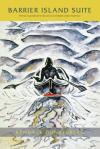
9781680030655 For the art lover, the environmentalist, or anyone interested in the Mississippi Gulf Coast or mental illness, Barrier Island Suitechronicles the life of painter and potter Walter Inglis Anderson of Ocean Springs, Mississippi. As a young man, he studied art, then suffered mental breakdowns (possibly as a result of malaria or undulant fever) and was institutionalized. Later he would become a successful yet reclusive artist, working at the family pottery and sailing out to the barrier island for weeks at a time to draw and paint. The poems in this collection are inspired by his Horn Island Logs as well as the biographies Fortune’s Favorite Child and Approaching the Magic Hour.

dunkelberg front cover smThe poems in Time Capsules are more autobiographical, though some poems or details are invented. Poems set in the present deal with marriage, family, setting down roots, and growing accustomed to Mississippi. Poems of the past deal with growing up in small-town Iowa in the 60s and 70s. Themes of travel and nature run through all of my poetry and are prevalent in Time Capsules as well. Trees, birds, and wildflowers are recurring symbols. The book’s four sections are loosely organized around the cycle of the seasons, beginning in winter with “The Land of the Dead” and ending in late fall with “Requiem.”

L&Acover

My first collection, Landscapes and Architectures is out of print, but I do have some copies available. Contact me if you’d like one or if you’d like a complete set of my three books! Landscapes and Architectures deals with the displacement of youth, modern culture (including some technology that now feels dated), love, nature, and finding one’s way in the world. The landscapes and cityscapes of the midwest, where I grew up, feature prominently in early poems set in Osage, Iowa, and Galesburg and Chicago, Illinois. Later poems take place in the wide open spaces and exotic landscape around Austin, Texas.
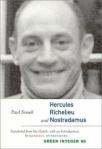
HRNcoverFor those who are interested in translation, surrealism, or mystical poetry, my translations of the Belgian poet, Paul Snoek, in Hercules, Richelieu, and Nostradamus may make a good stocking stuffer. This collection of three of his books from the 1960s is a small format pocket book. One of Belgium’s most prominent post-war poets writing in Flemish, Paul Snoek was active from the 1950s until his tragic death in in a single-car accident in 1981. Recently, I’ve been reworking some of my translations of his last two books and am thinking again about finding a publisher for more of his poems.

Untitled-2.indd

Last but not least, for the writer on your list, you might choose to buy a book about writing poetry (and fiction, nonfiction, and drama). My textbook, A Writer’s Craft, was published this year. Though it’s geared towards an introductory creative writing class, it was also written to be accessible for individual writers who want instruction and inspiration on the basics of the four main genres of creative writing. Each chapter ends with writing exercises to provide inspiration and more are available on the companion website and on its GoodReads community.

Why Rank MFA Programs? Or Why Not…

News appeared recently on the Creative Writing Pedagogy Facebook Group about a new ranking of MFA programs based on publishing history in annual prize anthologies. Naturally, a discussion ensued about the value of rankings (which is dubious, and to credit this one, they even begin their post with a disclaimer about why you shouldn’t care about their ranking, but then they go on to rank programs) and the methodology of basing rankings on placement in Best American Short Stories, Best American EssaysBest American Poetry, O. Henry Prize Stories, Pushcart Prize anthologies. As you might guess, quite a few programs get left out of that list, since only a very few writers (even well-published ones) end up in these anthologies each year.

The selection criteria for these anthologies might be called into question (though their goal is not to serve as a tool to rank MFA programs, so their editorial policies may well meet their market and their own goals). Furthermore, we might ask what other awards or anthologies are out there that are overlooked, thereby privileging certain kinds of writing: the Best New Poets series comes to mind, for instance, as well as AWP’s Intro Journals Project, which is specifically focused on current MFA students.

Annual prize anthologies have been criticized for their lack of inclusivity, so they may not be the best to use (exclusively) when ranking. In recent years, I’ve noticed attempts by the editors of these anthologies to be more inclusive in terms of race, gender, and identity, yet they still may not by as inclusive in terms of region, genre, and literary style. So why not include publication in “best of” genre anthologies, too? Many of our students have no desire to write the kind of stories, poems, or essays that would land them in the annual prize anthologies, yet they receive other forms of recognition in their chosen genres.

Rankings of MFA programs will always be controversial, yet the debate about what criteria to use can be constructive. If a prospective MFA student’s goal is to get into one of these anthologies, this ranking might be worthwhile, though a causal relationship isn’t guaranteed: as any investment portfolio is required to tell you — past performance is not a guarantee of future success.

If your goal is to be a professionally active writer, however, then this list may not help so much. How successful are the top-ranked programs at getting books by their students/alumni published? Probably pretty good, but what kind of books, and what kind of book does the prospective student want to write? What programs are overlooked in a ranking that focuses on annual anthologies? Which programs best serve students who want to teach, work in publishing, find alternate writing-related career paths, etc.?

Which programs best serve writers who aren’t already very sophisticated writers at the time they apply? Is the success of the top-ranked programs due to the instruction they provide or the quality of writers they’re able to attract and how selective they can be? What does the prospective student really need — excellent teaching that can help them improve or powerful writers who can help them network and get their already polished work noticed in the literary marketplace? Does a prospective student want mentoring or does she/he want to be anointed by a literary gatekeeper. And what happens if you don’t get anointed? Not everyone at these programs goes on to an illustrious literary career, after all.

These are all questions a prospective student ought to consider: what kind of program best meets your needs and what kind of culture will you fit into as a writer. Most of the advice I read urges prospective MFA students to avoid rankings and to really research the programs they are interested in. And yet, humans love rankings, and rankings tend to reduce the choice to a number — who performs best in terms of certain criteria.

My program has been ranked number 1 in a list of online programs in English and Creative Writing at Nonprofit Colleges Online (low-res programs were included). The next year, we fell to number 2, though we were still the top creative writing program on the list. That was gratifying, though I’m pretty sure the main criterion for this ranking was that our tuition is very low, which was confirmed by the slight change in ranking the second year. Don’t get me wrong, I love the exposure, and if you’re looking for low tuition, then this ranking is helpful. But I don’t let my ego swell too much because of it.

Rankings may be useful when considering graduate schools, but a ranking should only be one source of information you use. Carefully consider the criteria used in making the ranking, and compare it to other sources of information. AWP’s Guide to Writing Programs is a good place to learn about MFA, MA, and PhD programs, as is New Pages,  while Poet’s & Writers focuses on the MFA, and Publisher’s Weekly claims to list MFA, MA, and PhD programs, but I’ve primarily found MFA programs in their listing. Each database provides different information and might index different programs, so it’s worth checking and comparing them all. And it’s probably worth comparing different rankings for the information they might provide, but don’t just apply to the top-ranked programs. And don’t discount the programs that are overlooked in those rankings. Look for the program that will be the best fit for you!

Rediscovering Lists on Twitter

Recently, I’ve gotten back into Twitter lists: making them and finding them.

Lists is one of those features on Twitter that often goes overlooked. They hide on a user’s profile. At least when using the app, you have to click on the gear icon on their profile page to View Lists.

I was reminded of them when searching for authors to follow. I knew the authors, but couldn’t always guess their handle. One of my searches on names and book titles sent me to the Mississippi Library Commission’s list of Mississippi Authors: Missssippi Writes @MSlibrarycomm. This list has 114 members (MS writers on Twitter) and only 5 subscribers, including me with 2 of my accounts. I’d like to see this triple n the next week!

@MSlibrarycomm also has lists for: Mississippi Indie Books, News, Schools, Libraries, as well as Library Associations, Author Geeks, etc.

Following a list is a great way to organize your Twitter feed because you only see tweets from those accounts when you view the list, so you’ll focus on the list subject rather than seeing those posts mixed in your usual feed. It is also a good way to see tweets by people you don’t follow and to discover new people to follow.

You can create your own lists, too. I have lists of literary magazines, writers, literary magazine resources, and bookstores. These help me find the people on Twitter that I want to follow. You can even add someone to a list without following them, if you only want to see their tweets when you view your list.

Lists help me tame the wild Twitterverse (a little) and get more out of its content. So I’m glad I was reminded of this somewhat hidden feature.

Building Community for A Writer’s Craft

Untitled-2.inddNot long ago, I wrote about setting up the companion website for A Writer’s Craft. That is now up and running, but one thing I had always wanted to add was a discussion area, where teachers could talk about using the book and teaching introductory creative writing in 4 genres, and where students and teachers could share writing prompts, opportunities for undergraduate writers, etc.

In developing the companion site, we had talked about a number of services that could be used, since Palgrave.com doesn’t have a discussion feature for their companion websites. In the end, I settled on using GoodReads, which has the advantage of being linked to the textbook (on GoodReads) and open to all viewers. Anyone can read the discussions in a group, though to post to the group you need to login with GoodReads, Facebook, or Google and then join the group. That seems fairly easy for anyone to do, and I’ve found that GoodReads is a social media platform that isn’t too invasive — I can use it as much or as little as I want.

I called the group A Writer’s Craft Community to set the name apart from the title of the book and to emphasize that it is a community discussion. I hope this will become a good resource for anyone teaching introductory creative writing (though I also hope instructors will want to use my book).

So far, Teachers have discussion topics on:

  • Teaching 4 Genres
  • Sample Syllabi (I posted mine)
  • Workshop Strategies & Alternatives

Writers have discussions for:

  • Writing Prompts
  • Undergraduate Literary Magazines

I plan to add discussion topics in both folders, and I hope that people who are using the book will add to the discussion and maybe even suggest topics. Incidentally, I decided to have two groups, Teachers and Writers, because some people may get the book to use outside of a classroom. Though the Writers area is primarily aimed at undergraduate writers in an introductory class, teachers may add writing prompts, and the discussion could move on to topics of interest to any writer.

Companion Website for AWC

Untitled-2.inddThe companion website for my textbook A Writer’s Craft is now available at Bloomsbury Online Resources.

Materials for teachers and students are publicly available, including:

  • Teaching with A Writer’s Craft
    • Why Teach 4 Genres
    • Cross-Genre Teaching
    • The Small Group Workshop
    • Full-Class Workshop
    • Midterm and Final Portfolios
    • Teaching Creative Writing with Literary Magazines
    • Plagiarism
  • For Students
    • Journal Exercises
    • Online Resources

For those who adopt the textbook, additional resources are available once you register with Palgrave and request access to the textbook’s restricted materials. These include:

  • Lecturer Materials
    • In-Class Exercises
    • Small Group Workshops (sample exercises)
    • Powerpoint presentations for
      • Chapters 4 & 8-14
      • Publishing
      • Workshop Guidelines

I hope the public materials will be useful to anyone teaching creative writing, though of course if they are, I also hope that provides an incentive to try using the book. I hope the restricted materials will make using the book easier or at least provide some models that you can use to create your own materials for the book that match your teaching style.

Book Review: Always Happy Hour by Mary Miller

Always Happy Hour: StoriesAlways Happy Hour: Stories by Mary Miller
My rating: 5 of 5 stars

Mary Miller’s wit sparkles in these stories like a stiff drink with a healthy dash of bitters. They are dry, acerbic, and full of bitter irony. Consider the title, taken from a line on one of the later stories in the collection: it is “always happy hour,” yet no one seems happy in these stories. Or if they are, their happiness is fleeting, yet all of Miller’s characters are searching for this elusive spirit. We read these stories, not for the plot — spoiler alert, not much happens — but for Miller’s exquisite character studies, her detailed sense of place, and her subtle exploration of relationships. Miller’s narrators and female main characters are women, divorced or unmarried, most of whom are with or looking for boyfriends who are either divorced or unmarried. They are aware their relationships are imperfect and may not last. They may be dissatisfied with their current partner or they may be so satisfied they are sure they’ll do something to make their partner leave. We see the compromises they are willing to make for love, even as they struggle with commitment; we see them negotiate ex-wives and their boyfriends’ children; we see them struggle with family and friends who seem to have it all, at least if you believe their status updates. It is in the unguarded line of dialogue or the narrator’s reflections where Miller allows a realization, where we recognize ourselves in her flawed and human characters for whom a happy ending seems always just out of reach.

View all my reviews
Mary Miller will read at the Eudora Welty Writers’ Symposium on October 20.

Book Review: Daniel Wallace, Extraordinary Adventures

Extraordinary AdventuresExtraordinary Adventures by Daniel Wallace
My rating: 5 of 5 stars

Daniel Wallace has given us another thoroughly enjoyable read. His characters are easy to invest in. Nothing that extraordinary happens in their lives, at least not until Edsel Bronfman receives an offer for a free weekend at a time share in Destin, Florida. Then his life does take a few fantastic turns. In this latest novel, the tall tales from Big Fish have been brought down to a human level, yet the choices and adventures Bronfman faces are no less dramatic. Wallace still questions whether the invented reality or the mundane events of life are more real. This is an unassuming tale, much like its unassuming and ordinary main characters, yet it has pathos and depth, showing that still waters run deep and that even a mild-mannered clerk from Birmingham, Alabama, can experience something extraordinary. And speaking of Birmingham, this novel is well worth the read for its loving portrayal of Wallace’s hometown.

View all my reviews

Daniel Wallace will appear at The Eudora Welty Writers’ Symposium, Oct. 19-21, at Mississippi University for Women. the symposium is free and open to the public.

Book Review: Stripper in Wonderland

Stripper in Wonderland: PoemsStripper in Wonderland: Poems by Harriell, Derrick

My rating: 5 of 5 stars

If you think the cover has energy, then hold onto your hat. These poems leap off the page with vibrant language and daring subjects. Harriell is willing to take on race and sex, falling in love and becoming a parent, living the wild life and settling down. And the speakers of these poems do not always come across as the perfect heroes. Harriell gets us to question ourselves as much as we question society. No one is off the hook in these poems and no one is irredeemable. It is a bawdy, brawling, brash celebration of life.

View all my reviews

More Advice for Poets

This is a follow-up post to the one I made recently about Poetry Submissions. This week, I placed two poems in Valley Voices, and on the recommendation of editor John Zheng, I sent 3 haiku to Asahi Haikuist Network who took them for upcoming issues in October and next May.

What I learned from this (or was reminded of) is that it is good to form friendships and connections with other editors. Without John’s suggestion, I might not have found Asahi Haikuist Network, which I’m now glad to be able to read and to publish in. Haiku isn’t the main style of poetry that I write, but I suspect that reading more will inspire me to write more. I have a series of haiku that I worked on for my 4th manuscript and may continue to add to. Most were published in Poetry South when John was the editor, but these newer ones hadn’t found a home until now (and I hadn’t sent them out until now).

The other lesson I discovered about submitting poetry is to put your best poems first. That may seem obvious, but in reading submissions I am often surprised by the number of poets who don’t do that — or maybe they think they are doing it, and I just don’t like Poem 1 as much as Poem 4. You do your best and you should try to put the best poem for the magazine you’re submitting to first — the order may change depending on where you’re submitting.

Often in a submission, I treat it like a mini-collection. Most journals want 3-5 poems, so that’s less than a cycle, but there’s still probably a logic to the poems you send out together. I hope a journal might pick up more than one, but I still feel the submission is stronger if I send related poems. Now and then, though, especially for a magazine I’m not as familiar with, I will send a fairly random group of poems. Still, I want the tone to be about the same (humorous or deep, for instance). Thematically, the poems may be different, but something should connect them.

I want an editor to like the group of poems I’ve sent and even to consider accepting all of them. I know the reality is that an editor will then choose the poem or maybe 2 poems they like the best, but giving a good total impression will help sway the decision in the favor of the 1-2 poems they like best.

Having one of those poems first in the submission file is imperative. A reader may not make it past Poem 1, and if they do, their opinion of the poet will be colored by the poem they read first, so the subsequent ones may not get as close attention if Poem 1 doesn’t strike a chord. I know that’s true for me when I’m reading. It’s only human nature and is influenced by the sheer bulk of submissions any reader for a magazine is likely to encounter.

Making a decision about the order of poems in a submission is part of taking the proper care to submit work that is polished, proofread, and carefully revised. It’s part of the process that an editor will appreciate. And if all the poems in a submission packet are of roughly equal quality (I know as the writer it can be hard to make those determinations), then each poem should build on the previous one and lead into the next. Consider your submission as a whole and not as individual pieces of paper that you’ve thrown out into the wind.