This week, I’ve been learning how to apply to MFA programs in creative writing: I decided to take a free course, even though I direct an MFA program. I’m taking the course to see what Kenzie Allen has to say about the process and to review what I think about it, since I’ve written a number of advice articles and our program’s Guide for Applicants. This morning’s ‘class’ (each morning for 10 days you get an email with advice on applying) was on the Statement of Purpose. It got me thinking about the importance of this part the application, which I’ve written about previously.
Allen has some good advice, and she links through to several articles by others about how to write a statement of purpose. They all pretty much agree, though each gives a slightly different take. There’s no one-size-fits-all advice for this, or the statement wouldn’t be personal. Incidentally at my program, we call it a Letter of Intent. We do that in part to make it seem less daunting, in part to make it paradoxically seem more personal, and in part to emphasize your goals. You’re not selling me on who you are; you’re selling me on what you want to do in our program (and that you are the person who can do those things).
What I was struck by in my reading this morning is just how important this letter is. Everyone says the writing sample is the most important, and that can be true, but the statement of purpose or letter of intent is just as big a deal, and it’s probably harder to write.
I’ve seen letters of intent that definitely got an applicant into our program. Their writing sample was competent, but not terribly exciting, but their letter was moving and read like very good creative nonfiction. I could see the potential in this writer from their letter, even though I could tell from their writing sample that they were still struggling to find that voice in their fiction or poetry. The letter showed me that I had someone who was ready to make that leap in their creative writing.
I’ve also seen letters that swayed me the other way. I’ve seen many that used the clichés every advice article warns against: all the permutations of “I was born to write,” for instance. A few have been accompanied by writing samples that made me overlook the naiveté of a poor letter (yes, I know how hard they are to write!) and others that led me to believe the writer simply wasn’t ready for an MFA program yet.
I’ve even turned down one applicant, who wrote back an impassioned response defending themselves and arguing why they were ready and didn’t want to wait another year to reapply. I told them that this should have been their letter in the first place, and I allowed them to send me more writing. Eventually they were admitted to our program and are doing quite well. However, I don’t recommend that strategy!
We’re a small, young program, and so far we’re not overrun with applications. I can take more time with every applicant than the programs whose admissions committees see hundreds of applicants each admission cycle. We can give more personal attention, and so far, we can accept nearly everyone who seems to be ready for an MFA and who seems like a good fit for our program. That may change, and we may be faced with more difficult decisions. Yet even now, the statement of purpose/letter of intent is a very important part of your application, along with your writing sample. Those are the first two things we’ll see, and they form the basis of our initial decision whether or not to encourage you to complete your application and pay the application fee, send transcripts, and get letters of recommendation.
We want to know who you are and how you got to where you are, and we want to know where you think you’re going and why our program is a place that can help you get there. We want you to be as specific and detailed as possible, and we want your letter to be well-written, somewhere between a personal letter and a creative nonfiction essay. If you can do that, and if you send us writing that you’re passionate about that shows your promise as a writer, then the odds are in your favor.
The rest of your application confirms that you are who you say you are. It’s important, don’t get me wrong. But your letter and writing sample will literally give the first impression, and therefore, they carry the most weight.
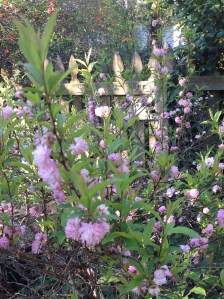 It’s spring in Mississippi, and at The W, we’re just coming off of Spring Break. Students may have been to the coast for spring break revelries or may have gone home to visit families. Some faculty may have done that, too, but many of us have been using our break from teaching class to catch up on grading or get ahead on projects that are hard to get to while classes are in session.
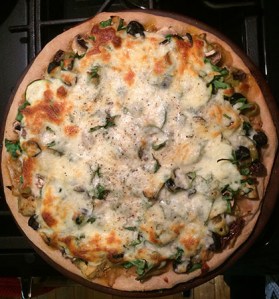 Tonight, I wanted a change of pace for our weekly homemade pizza. I usually make the standard red sauce, though occasionally, I’ll make a white sauce with flour, but tonight, I wanted something easier and with less carbs. Enter sun-dried tomatoes and buttermilk.
 The year is winding down, so I thought it would be fun to post a few highlights of 2018. Some I’ve written about, and some I’ve let pass without posting on the blog until now.
 Between his high school and college, we had a chance to take a family trip (with W honors students) to Peru. The picture is by the floating islands of Lake Titicaca. We also spent time in Lima, Cuzco, and Machu Picchu and the Sacred Valley. Thanks to our friends at
 There are a lot of good reasons to love editing a literary magazine: for one, you feel like you’re doing something for writers and readers by providing an outlet for talent and curating content for the public. That is certainly true about
 It’s always great to bring a dozen writers to campus, spend time with them, our students, and our community. My nerves usually start to settle down once everyone is in town and I pick them up from the hotel in a W van. This year, we’ll be without one writer: Silas House is down in his back and in some serious pain, so we’re talking about rescheduling for a later date. If there’s one thing I’ve learned in 11 years of directing the symposium, it’s that you have to go with the flow. You can redirect it somewhat and try to keep everyone happy and moving in roughly the same direction (good food and great writing helps), but there are some things you just can’t do anything about, and you just have to let the momentum of the weekend develop as it will.

