I’ve reached Day 8 in Kenzie Allen’s 10-day course on applying for the MFA in creative writing, and she’s talking about the CV, transcripts, and the GRE. She has a lot of good advice, so if you haven’t taken her free course, you should. She even links to my blog a few times, so she must have done her research!
I agree with Allen about the CV — it should highlight your education and other experience, it should be professional and easy to read, and you’ll probably elaborate on most of those things in your letter or statement of purpose, but the CV brings them all together and is a place where you can list all of your publications (if you have them) without bogging down your SOP. At our program, it’s optional, so don’t stress about it, but do send one if it helps you make your case.
I also agree that the GRE has become less and less important. See if the schools you’re applying to require it, and don’t take it if you don’t need to. If you do need to report a score, remember that most MFA programs don’t care what your score is, but they may be required by their graduate school to use a minimum score as a requirement for admission. They may not publicize what that score is, and they may have some leeway in how they set that score (that will vary by university), but you’ll need to report it if they require it. Then the committee will likely ignore the score once they see you have met the minimum standard.
However, I realized that, though I agree with most of what Allen says regarding transcripts, I hadn’t written about those and there are a few things I can add from a program director’s perspective. For one, Allen says that in her experience it doesn’t matter if you have studied English as an undergraduate. While that’s true for many programs, I also know of some that require a certain number of prerequisite English or creative writing undergraduate courses. Usually, they don’t ask for specific ones, but a certain number of hours of literature. You might be admitted without these, but required to take them in addition to your regular degree requirements.
Our program doesn’t require any prerequisite English courses, and I’m happy with that. We’ve admitted a dancer and an accountant, among others. I’ve probably forgotten more of our students’ undergraduate majors than I remember, since once you’re in the program, it won’t really matter. But your transcript will still make a difference: it tells me things I want or need to know.
1) What you’ve studied
Naturally, we like to see that you’ve studied English, whether or not your major was in English. Many of my best creative writing students over the years have not been majors, so I’m open any major. If you never took an English class as an undergrad, that can be an issue (in terms of your preparedness for our degree), so I’ll want to see evidence elsewhere of your active reading life and of your sophistication as a scholar. After all, some of our classes demand that you do literary research, so you want to show you’re prepared. We also like to see undergraduate creative writing classes in the mix, but if you haven’t had that opportunity, we understand. Things like summer workshops or activity in local writing groups can help your application if you don’t have creative writing classes. So if your transcript has holes, you want to address them in your SOP by talking about what you’ve done since graduation. Most of the applicants to our low-res program have been out of school for many years, so their experience since undergrad should weigh much more heavily than their undergrade, except it does tell about your academic record.
2) How well you’ve performed in school
The one thing you can’t change is your undergraduate GPA, and that can be very important for admissions. Actually, you can change it by going back and taking some undergraduate classes or by enrolling in another graduate program. If your GPA is deficient and you’ve gained a lot of experience and motivation, you may be well-served by taking a semester or two, even part-time, to show that you can now do better than you did the first time.
For our program, you need a minimum overall GPA of 2.75 or a GPA of 3.0 in the last 60 hours of work in order to be fully admitted to our program. If you don’t have that, then taking additional credits might help you bring up those last 60 hours. We consider every semester in its entirety, so if your the 60th hour is in a semester with several other hours, I would have to consider the whole semester. Taking additional classes might even affect which semesters would be considered in your last hours, which might help as much as earning higher grades.
(These requirements will likely be different for each university on your list.)
3) How you can be admitted
GPA makes a big difference in how we admit students. The choice of whether to admit someone hinges more on their overall academic record and what they’ve done since graduation. I’ve admitted students who were marginal at best during their undergraduate years, yet who had gone on to achieve remarkable things. I want to look at the whole picture, in other words, but I also have to consider your potential as a student and I have to live within the rules of my institution’s admissions policies. Check these out for any school you’re interested in, esp. if you’re worried about your previous record.
I can fully admit someone to our program if they meet our admissions standards or I can conditionally admit anyone to our program if I feel there are mitigating circumstances.
Conditional admission means that you are limited to taking two classes in your first semester (or three if you come to our 1-hour residency), and you must earn a B or higher in those classes to show you can handle graduate school. (You’re only allowed two Cs in your program, so to get one in your first semester would be a very bad sign. Why should we keep taking your money if you’re not going to succeed in our program?) Conditional students are also not eligible for federal loans, so you would need to pay for your first semester out of pocket or with private loans. But once you’ve proven yourself, you are then fully admitted and can study full-time and qualify for loans. I’ve had plenty of people do this and do very well in our program.
So, if you’ve had a rough patch in your academic career, know that we’ll understand. It’s probably something you want to address or even get your recommenders to address in their letters, but it shouldn’t be something that will stop you from earning your degree. You can tell us why you hit that rough patch, if you want to — sometimes it may now be exactly what inspires you to write — or you can simply acknowledge it and talk about the things you’ve done since then that show you can succeed.
If you’ve been a great student but in areas other than Engish, then acknowledge that as well and show us how you combine your other interests with your writing or tell how your journey took you to a love of writing.
Your transcripts are important documents that show your preparedness and your aptitude for scholarly work. They are not the end-all-be-all of your application, but they provide a unique window into who you are that is complemented by your writing sample, statement of purpose, and letters of recommendation.
We do need to see official transcripts from every post-secondary academic institution you have attended, whether you received your degree from there or not. (Some schools make exceptions for transcripts with fewer than a given number of hours, but many do not.) Go back over your transcripts (as I will) and look to see if you transferred any credits from another school. Make sure we have the transcript from that math class you took at community college, etc. Doing that on the front end will make things easier when it comes time for us to make our decision.
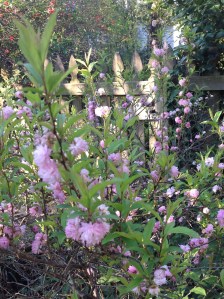 It’s spring in Mississippi, and at The W, we’re just coming off of Spring Break. Students may have been to the coast for spring break revelries or may have gone home to visit families. Some faculty may have done that, too, but many of us have been using our break from teaching class to catch up on grading or get ahead on projects that are hard to get to while classes are in session.
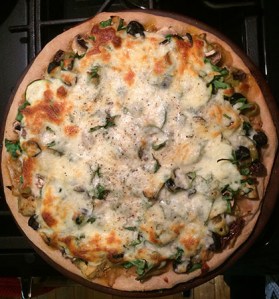 Tonight, I wanted a change of pace for our weekly homemade pizza. I usually make the standard red sauce, though occasionally, I’ll make a white sauce with flour, but tonight, I wanted something easier and with less carbs. Enter sun-dried tomatoes and buttermilk.
 The year is winding down, so I thought it would be fun to post a few highlights of 2018. Some I’ve written about, and some I’ve let pass without posting on the blog until now.
 Between his high school and college, we had a chance to take a family trip (with W honors students) to Peru. The picture is by the floating islands of Lake Titicaca. We also spent time in Lima, Cuzco, and Machu Picchu and the Sacred Valley. Thanks to our friends at
  There are a lot of good reasons to love editing a literary magazine: for one, you feel like you’re doing something for writers and readers by providing an outlet for talent and curating content for the public. That is certainly true about
  Kendall Dunkelberg